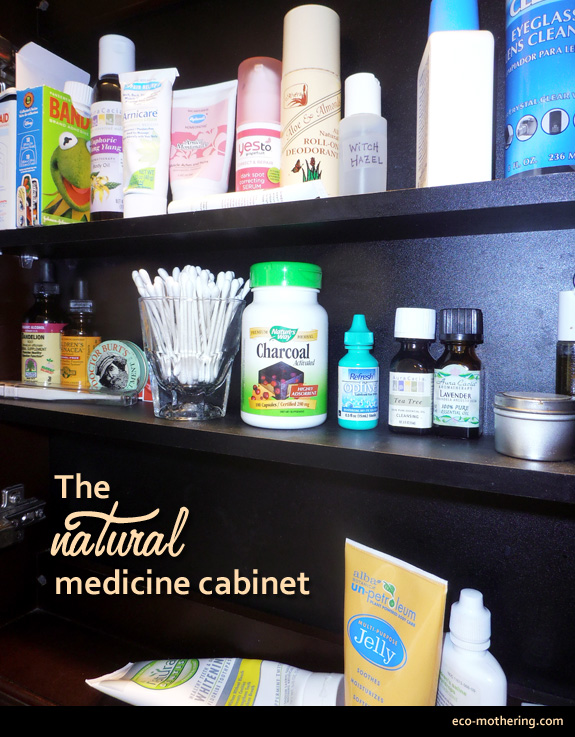
Top 5 Natural Medicine Cabinet Essentials

natural-medicine-cabinet

  1. Arnica

    A perennial herb found in Europe, Russia and parts of North America, arnica has long been used in herbal medicines. Its anti-inflammatory properties help decrease pain and swelling, which makes it good for bruises and sunburn. It’s also touted for speeding up wound healing time. We use arnica cream for bruises and muscle aches. It’s easy and odorless. It’s also available in pellet form for taking internally. In most cases, arnica is my go-to body ache reliever instead of reaching for the Tylenol.

  2. Witch Hazel

    This astringent, produced from the Witch Hazel shrub, was frequently used for medicinal purposes by the American Indians. I love its sweetish scent. I dab it on acne and bug bites and used it post-partum to heal from giving birth. Yet that just touches the tip of the iceberg. Witch hazel has tons of other uses that I’ve never even tried, including: poison ivy, dry skin, diaper rash, hemorrhoids, deodorant and chicken pox blisters.

  3. Essential Oils: Tea Tree and Lavender

    As a natural disinfectant, tea tree oil is great for cleaning wounds. I added a few drops daily to a cut underneath my toenail, and the infection disappeared within a few days. I also use tea tree oil in an aromatherapy burner when Sofie is sick as it helps alleviate respiratory problems and strengthens the immune system.

    In most cases, lavender oil can be used directly on the skin. It helps deter bugs and can also be dabbed on afterwards to cut the itch in bug bites. Combine lavender with a carrier oil for a soothing massage. Use it in aromatherapy to reduce stress, relieve headaches and aid in respiratory illnesses.

    Tea tree and lavender are my essential essential oils. Read about the other three oils in my Top 5 Essential Oils for Natural Healing.

  4. Activated Charcoal

    This is a new addition for me, and I first became interested when I heard about its teeth whitening powers. (Mine are becoming stained from too much tea and red wine!) After researching it, I learned that activated charcoal is a toxin remover used in hospitals for cases of food poisoning. Activated charcoal can also take the venom out of insect bites, speed wound healing, freshen breath and improve digestive problems. How can this not be in my medicine cabinet? I’m just beginning to use it for the daily teeth whitening, but I’m sure glad to have it in case of emergency food poisoning…

  5. Burt’s Bees Res-Q Ointment

    I wanted to make this list about five generic items, without using brands, but I haven’t found anything quite the same as Burt’s Bees Res-Q Ointment. Maybe it’s a placebic effect at this point, but both me and Sofie feel better just knowing we’ve dabbed a bit of “the green cream” on our scratches and bruises. It’s an easy, all-purpose ointment filled with good stuff (beeswax, cocoa butter, vitamin E, lavender extract, rosemary extract, olive and sweet almond oils). Its active ingredient is Comfrey, an herb that contains allantoin, which decreases inflammation and stimulates new cell growth.

This post is featured at Tuned-in Tuesdays, Party Wave Wednesday, Thank Your Body Thursday and Natural Living Mondays.

Vote for me @ Top Mommy Blogs - Mom Blog Directory

Top 5 Natural Remedies for Children’s Allergies

Many of us reach for the allergy medication during hay fever season, but we think twice before giving it to our kids. Here are some natural allergy remedies you’ll feel comfortable trying on your little ones.

  1. Local Honey

    This is a much-discussed remedy that has worked well for my family. The theory is that ingesting honey from local plants and flowers builds up your immune system to those same plants, sort of like a vaccine. I’ve used it myself before, and this year we tried it on Sofie when she began to exhibit signs of hay fever: sneezing and stuffy nose.

    You usually have to plan ahead for this and begin taking 1 teaspoon of locally grown honey about 4-6 weeks before allergy season. Typically, I have used commercial honey common in the stores or honey direct from a friend’s hive, but raw honey is supposed to be your best bet. It doesn’t look as clean and clear, but it contains much higher proportions of nutritional elements.

  2. Mint Tea

    I’d recently read about peppermint tea counteracting allergies, so we decided to try this method as well. Especially since Sofie decided after a few weeks that she didn’t like eating a spoonful of plain honey every day. Now I mix it into a cup of hot tea in the evening and she’s been downing that like nobody’s business. I have to say that her allergy symptoms have practically disappeared over the last month.

    mint-tea
    Peppermint has decongestant and anti-inflammatory properties and makes a yummy cup of tea. However, I did read that peppermint tea should be used with caution in very young children as it may aggravate GERD (gastroesophageal reflux disease) or cause a choking sensation due to the menthol. Spearmint is a better alternative. We’ve been using Bigelow Mint Medley— a combination of peppermint and spearmint tea.

  3. Water (drinking, washing and rinsing)

    This is perhaps the easiest and cheapest remedy, and works well alongside other remedies. Drinking water helps thin nasal mucus in stuffy noses. Washing your child’s face (and changing their clothes) after they’ve been outside keeps them pollen free. A shower before bed would be best, but I’ve found that even just rinsing Sofie’s face and eyes with cool water helps keep allergies at bay.

    Studies have shown the neti pot to be most effective in reducing allergies, but it’s a strange sensation for kids to get used to. Based in Ayurvedic traditions from India, the neti pot is a small container (shaped rather like Aladdin’s lamp) that you use to flush your nostrils with saline water. It rinses away those bits of pollen and even helps with sinus problems. You can find them online or at nearly any drugstore these days. For best results, use the neti pot twice a day, at morning and night. And you don’t have to keep buying those premade saline packets. Make your own by mixing ½ teaspoon of salt with pinch of baking soda in eight ounces of warm water.

  4. Quercetin

    A plant-derived compound, quercetin is a natural antioxidant that keeps cells from releasing histamine. Now I took quercetin supplements a few years back and didn’t find them very helpful, but I’ve since read that it works well in correlation with another natural remedies. For adults, the recommended dosage is 1,000 mg/day, and it’s best to begin taking it six weeks before allergy season. Note: Quercetin supplements are not recommended for kids as not enough research has been done on possible side effects.

    However, you can give your kids foods with high levels of natural quercetin: apples, grapes, citrus fruits, dark berries, onions, tomatoes, broccoli and leafy greens. Just one more reason to have your kids munching on healthy fruits and veggies. (Speaking of fruits, those allergic to ragweed should avoid melons, cucumbers and bananas during allergy season).

  5. Omega-3 Fatty Acids

    Studies have shown that people who eat foods rich in anti-inflammatory omega-3s have less allergy symptoms. I haven’t tried this method yet, but since omega-3s are good for so many things, it wouldn’t hurt to beef up Sofie’s intake of them. Omega-3 fatty acids are prevalent in cold-water fish (salmon, haddock and cod), walnuts, grass-fed beef, eggs and flax seed.

This post is featured on Frugal Days, Sustainable Ways and Small Footprint Fridays.


Top 5 Yoga Poses for Kids

Kids love to move. Getting them started early with yoga feeds that need and offers a ton of benefits—both physical and mental—including: strength, flexibility, concentration, self-control, balance, expression, confidence and relaxation. Who doesn’t want all that for their child? Below are five poses (four easy, one challenging) that are great for introducing kids to yoga.

yoga-poses-for-kids

  1. Tree Pose (Vriksasana)

    yoga-treeThis classic is the first yoga pose my daughter latched onto, and she still loves it. Tree pose teaches self-control and concentration while it improves a child’s balance and lower body strength. Kids “become” a tree by planting their feet into the ground for stability and noticing the sway of their bodies. Many often find they have better balance on one side more than another, which is perfectly normal.

  2. Downward-Facing-Dog (Adho Mukha Svanasana)

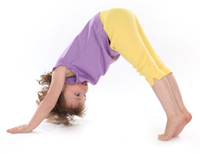
    yoga-downward-dogAn excellent and invigorating pose for kids and adults alike, Downward Dog is good for relieving tension and energizing the body. Its full-body stretch helps relieve back pain, headaches and fatigue. Traditionally part of the Sun Salutation sequence, Downward Dog flows well into Child’s Pose.

    yoga-Ldog

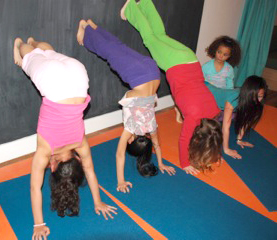
    A fun version of this pose is L-Dog, which is like downward dog with your feet against a wall. Sofie loves L-Dog, which she learned from her yoga teacher, Miss Elyse (Om Kids Yoga Studio), who believes upside poses are excellent for all ages: “Anytime we go upside down we are improving digestion and blood circulation throughout the body. Upside down poses such as L-Dog and Scorpion build lots of upper body strength and helps kids let go of their fears.”

  3. Bridge (Setu Bandha Sarvangasana)

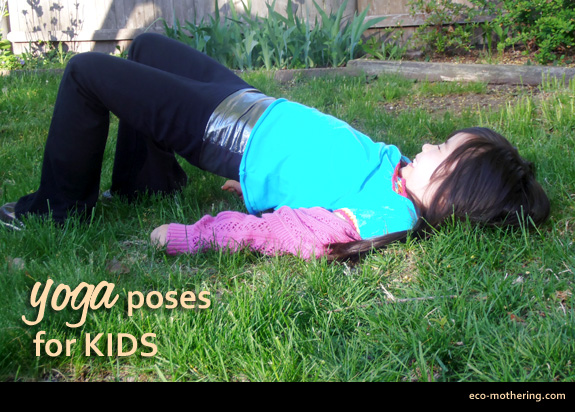
    yoga-bridgeThis floor pose stretches the upper body and chest, improves digestion, increases flexibility and calms the mind. It’s also helpful for relieving stress. You can make a game of Bridge by pushing toy boats or animals beneath your child’s lifted body. This will inspire them to see how high they can raise up. Bridge is also an excellent pose for adults who spend large quantities of time hunched over a computer.

  4. Lion Pose (Simhasana)

    yoga-lionKids always love animal poses and this one adds a fun vocal element. Lion strengthens the lungs, releases facial tension and activates the immune glands of your lymph nodes. The pose can be done sitting cross-legged or kneeling. Have your child think of something that’s bothering them as they squeeze their body, hands and face real tight. Then let it go by extending the arms forward, releasing the tension, sticking out the tongue and roaring loudly. Repeat several times.

  5. Crow Pose (Bakasana)

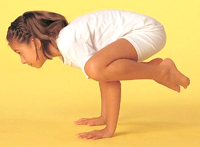
    yoga-crowThis one takes some practice. I have never been able to do Crow, but Sofie’s getting close. Crow is the pose for building arm strength and balance. According to Miss Elyse, crow also builds confidence. “Most kids have to work really hard at learning the arm balance, and when they finally get it, they are so excited and more confident to try other challenging yoga poses.”

    Here’s a great video for getting into Crow.

Rhode Islanders should definitely check out Om Kids Yoga with Elyse Rotondo. She offers weekly classes for babies to teens as well as mother/daughter retreats and monthly pajama party yoga!

Crow pose image courtesy of OmGirl San Francisco. L-Dog pose image courtesy of Om Kids Yoga. All other yoga pose images courtesy of Namaste Kid.

Vote for me @ Top Mommy Blogs - Mom Blog Directory

This post is featured in Party Wave Wednesday at HolisticSquid.com.

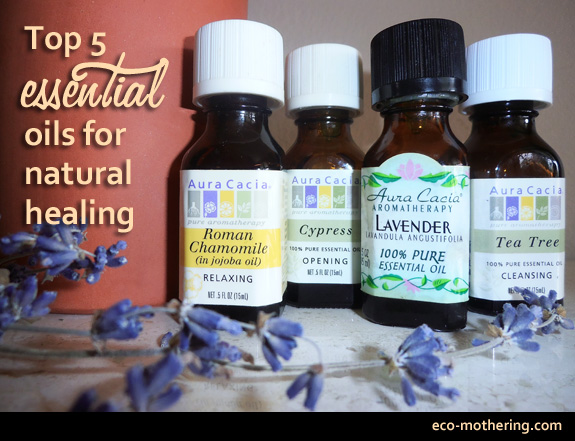
Top 5 Essential Oils for Natural Healing

I’ve been a fan of essential oils (EOs) since my husband bought me a starter kit 15 years ago. While I have used them in baths and massages, I use them most frequently in a burner for soothing sicknesses (lemongrass for reducing fever) and or influencing the mood of others (ylang ylang for calming anxiety). They smell great and come in handy for relieving a host of child-related symptoms.

Here are my Top 5 essential oils. Please be sure to research them for proper application and dosages.

top5-essential-oils

  1. Tea Tree

    Distilled from the leaves of the Australian Melaleuca Alternifolia tree, this is one of my stock oils and a great addition to the natural medicine cabinet. Tea tree oil is touted for its antiseptic properties in fighting bacteria, viruses and even foot fungus. It’s also great as a cleaner for disinfecting household items like the humidifier. I often burn tea tree with other oils when Sofie is sick as it helps alleviate respiratory problems and strengthens the immune system. Inventive Use: A drop of tea tree oil diluted in 1 teaspoon of olive oil is said to help relieve ear aches.

  2. Lavender

    Another must-have in your essential oil collection, lavender has multiple uses as a painkiller, relaxant, antiseptic and antidepressant. Its calming properties make lavender the scent of choice in eye pillows and bath products. (I chose it for Sofie’s nighttime “monster spray.”) Lavender is one of the safer oils, often applied directly to the skin in massages or for treating bug bites and sunburn. Inventive Use: Stimulate hair growth by massaging the oil onto your head.

  3. Jasmine

    One of the best-smelling EOs in my opinion, jasmine acts as an antidepressant, antispasmodic and aphrodisiac (I sometimes burn it with other oils to set the mood for a party ). It’s an oil with contradictory properties; regarded as both calming and stimulating, jasmine can simultaneously strengthen contractions and relieve pain in childbirth (not recommended for use in pregnancy until advanced stages of labor). When blended with other oils, jasmine can encourage cell growth and skin elasticity. It’s also effective with lingering coughs. Inventive Use: The Chinese gave jasmine to inebriated guests to clear their heads.

  4. Roman Chamomile

    Revered since ancient times as one of the nine sacred herbs, chamomile is recommended for its analgesic, antidepressant and anti-inflammatory properties. It can be used for alleviating muscle pain, headaches, toothaches and skin conditions such as acne and dermatitis. Also a relaxant, Roman chamomile helps with insomnia, digestive problems and menstrual pain. Inventive Use: When diffused, it can help calm irritable babies and toddler tantrums.

  5. Cypress

    This woody scent blends well with other oils and acts as an astringent, antiseptic and sedative. (I use it in the sick room to aid with coughs and flu symptoms.) Due to its purifying and balancing qualities, cypress calms anger and anxiety and regulates bodily excesses (nose bleeds, fluid loss). It’s especially helpful in balancing the female reproductive system. Inventive Use: A natural deodorant, cypress can be blended with other oils to control body odor.

For more information on essential oils, check out this online starter guide. Or buy this book that I use for less than $1!

This post is a part of Thank Your Body Thursday.

Vote for me @ Top Mommy Blogs - Mom Blog Directory

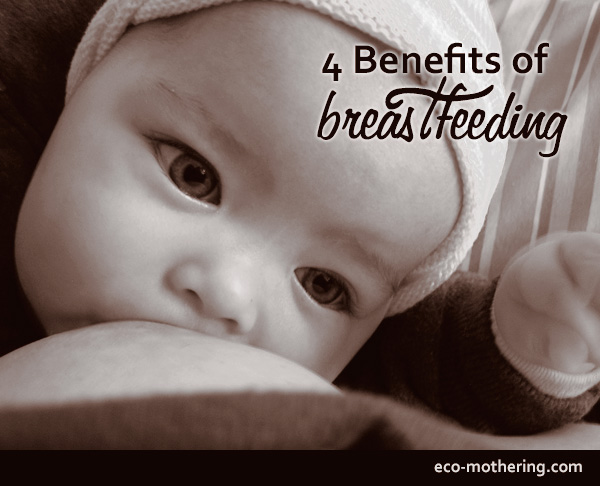
Four Benefits of Breastfeeding

This is guest post from Amanda Carlson, a former newborn care nurse.


Many mothers are overwhelmed when it comes to breastfeeding. Should they or shouldn’t they? Is it better for the baby or not? What about the mother? Well, here are four reasons that breastfeeding is a good idea.

  • Healthier Baby

    First of all, studies have shown that breastfed babies are healthier overall. They have fewer ear infections, and the immune boosting power of the first breast milk that the mother’s body produces is essential to helping the baby produce antibodies of her own. Even allergies are reduced by breastfeeding. There is a lowered chance of diabetes and tooth decay in breastfed babies as well.

  • Healthier Mother

    When mothers breastfeed, they get many benefits. They reduce their chances of cancers like ovarian, breast and uterine. They also reduce their chances of getting osteoporosis, and diabetic mothers have fewer issues with insulin after birth when they breastfeed. Breastfeeding burns calories, helping the mother to lose the baby fat, and releases a chemical that helps the uterus to return to normal size.

  • Saves Money

    Since breast milk is produced naturally by the mother it is not something you have to buy. Formula is something you have to buy however and it can get expensive. Some babies eat over one thousand dollars’ worth of formula in one year.

  • Forms Connections

    When mothers breastfeed they get a stronger sense of connection with their child. This can help to reduce anxiety and promote a closer bond. The same is true for the baby. Studies show that babies who are breastfed are more confident later in life and have less anxiety. They also tend to be smarter and have fewer behavioral issues as they grow up.

These are just four reasons for breastfeeding your child. The choice is yours, but, as you can see, the benefits of breastfeeding are many.


About the Author: Amanda Carlson is a blogger and a former newborn care nurse. She shares her knowledge at www.newborncare.com. You can reach her at [email protected].

Post-Partum Depression: Can Eating Your Placenta Help?

Now that we’ve decided to have a second child, I’m already jumping ahead to explore things I might do differently. Believe it or not, one of those things is eating my own placenta.

I’d heard the controversy last spring over actress January Jones eating her placenta. While I wasn’t against the practice, I didn’t think I was crunchy enough to ever try it. Then I read an article in Kiwi magazine about a mom who used it with her third child largely to ward off post-partum depression. That got me listening.

post-partum-depression

With Sofie, the cloud of depression descended upon me almost immediately after her birth, but I was too stubborn and anxious to take any medication for it until, finally, after six months I relented to trying a small dose of Zoloft. The drug eased my mood considerably, although I worried about side effects as I continued to breastfeed. This time around, I’m nervous about spiraling into that depression again. I feel like the first six months of motherhood were a suffocating fog of tears and darkness. I certainly wouldn’t wait that long again to seek help. But I would like to seek more natural anti-depressants.

What if those natural nutrients happened to be in my very own placenta?

Although common among other animals and a part of traditional Chinese medicine, placentophagy (consumption of the placenta) is controversial in America. While research shows the placenta is packed with nutrients, there is no scientific data yet to prove that it staves off post-partum depression. What there is is lots of anecdotal evidence from moms sharing their experiences. Most raved about placentophagy and its other benefits including: quicker breast milk production, decreased bleeding and increased energy. I found one who tried it with a negative reaction.

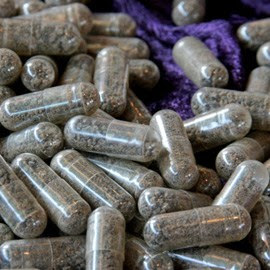
How does one eat her placenta? Well, there are recipes for cooking it a variety of ways, but placenta pills is the only method I’m willing to try. It’s a process called placenta encapsulation, and it sounds simple enough. (Watch this video, if you dare.)

Be sure to include placenta encapsulation in your birth plan, and check that your hospital allows it – most do. Then contact a placenta service provider (many doulas also offer this service) beforehand to discuss details. You will need to keep the placenta on ice and have it encapsulated within the first 24-48 hours after delivery. I am sure my husband will be eager to know he’s on cooler duty! (For a good laugh, read this Time article by a first-time father and placenta saver.)

Placenta encapsulation

The placenta specialist dries the organ out, grinds it and encapsulates it into pills that are apparently as tasteless as any other vitamin. Some states insist this be done by the specialist in the mother’s home. Depending on where you live, the cost ranges from about $150-275.

The biggest concern seems to be that mothers will rely on their placenta as the sole source of healing severe post-partum depression. While placenta capsules can help, they aren’t meant to be a substitute for seeking additional resources, whether that means seeing a psychiatrist or taking anti-depressants.

For myself, cardio exercise is key. Incorporating exercise into my life when Sofie was a toddler helped me finally lose the baby weight and maintain my flow of endorphins as I weaned off the Zoloft. I’m a three-times-per-week zumba chick. I’ve learned that my body needs such high-energy exercise to release built-up toxins (physical and emotional). I would definitely include zumba as part of my postpartum plan.

I wrote this blog as a means of researching placenta encapsulation and gearing myself up for it. If I pursue this, I would probably seek out a PBi-certified specialist. Even if the effect is largely placebo-like because I think the pills work, it could keep me from turning to antidepressants. And, from an environmental perspective, you can’t get greener than eating your own placenta!

More moms’ stories on taking placenta pills:

  • Momaroo
  • Lindsay, blogger, Passionate Homemaking
  • Laree Lindburg
Vote for me @ Top Mommy Blogs - Mom Blog Directory


Save Energy: Go To Bed With a Hottie

I was recently introduced to the Hottie by a mother-daughter business team who follows this blog. (I love that the daughter in the company, Louisa, is the twelve-year-old entrepreneur behind the design.)

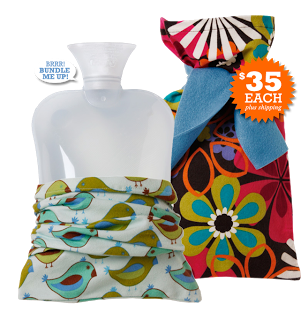
Popular in Great Britain and Germany, the Hottie is a fabric-covered hot water bottle and an eco-friendly alternative to using electric blankets or cranking up the thermostat at night. The company, who call themselves Love at First Night, sent me a sample.

Hotties from Love at First Night

This is not your grandmother’s hot water bottle. I recall the funky-smelling red rubber bottles of my childhood. My grandmother always seemed to have one around for soothing body aches or indigestion. The Hottie contains a modern Fashy water bottle made in Germany. It’s transparent and manufactured from thermoplastic, which is odorless, recyclable and keeps water warm hours longer.

I can’t wait for winter to come just so we can try it. (And I’ll report back after we do.)

We have never used electric blankets. Usually we turn the thermostat down and rely on a combination of body heat, cozy blankets and mist from the humidifier to keep us warm. This will be Sofie’s first winter sleeping regularly in her own bedroom, so I am glad to have the Hottie to keep her toasty on cold New England nights. (I’m also thinking this would be a great gift to keep your college-age kid warm in the dorm.)

Love at First Night selected a cute retro flower pattern for Sofie from their array of bottle covers handmade in Rhode Island from quality cotton flannel. The fabric is machine washable and gets cozier after multiple washes. Choose from many retro and chic patterns.

Aside from keeping you warm in bed, here are some more uses for hot water bottles:

  • Alleviate body aches and pains
  • Relieve sports sprains
  • Soothe menstrual cramps
  • Reduce nighttime chills while camping
  • Relieve arthritis
  • Stay warm at outdoor sporting events
  • Soothe earaches and toothaches
  • Warm up the car on a cold winter morning
  • Use as an ice pack to cool off
  • Water plants with the water when done

Disclosure: Thanks to Love at First Night for sending a sample to preview. As always, all thoughts and opinions are my own.

A Case of the Grumpies: How to Diagnose, Treat and Prevent Bad Mommy Moods

This past weekend I came down with a bad case of the Grumpies. I can blame the heat, the full moon, my seasonal allergies, the manuscript rejection that arrived in the mail. (And I did.) But the reasons are irrelevant.

What matters is how my daughter suffered from it. I acted in ways that should put me in the Mommy Hall of Shame. While I did intersperse some hugs and “I love you”s, I felt my cantankerous and explosive moods dominate. While such parenting moods are inevitable, it’s helpful to be armed with knowledge before being afflicted.

handling-the-grumpies

Photo by Shardayyy

ABOUT THE GRUMPIES
The Grumpies is an invisible condition that breeds on negative energy. Common among kids and adults alike, it is especially prevalent among stressed-out mothers who tend to put their needs last. Signs include headaches, fatigue, frustration and pessimism. Unfortunately, the Grumpies often goes unnoticed until it is too late.

Note: The Grumpies does not jive well with ecological living. When stricken with this condition, the last thing one wants to do is weed the vegetable garden, take out the compost, cook whole grains from scratch or enjoy a family walk in ninety-degree weather. More commonly, the Grumpy-infected person prefers to crank up the carbon-emitting air conditioner and feast on empty-calorie snacks that come with excessive packaging.

SYMPTOMS

A mild case of the Grumpies may result in:

  • Tossing out exaggerated sighs over unending questions
  • Making snarky comments about messy rooms and food requests
  • Stomping through the house and slamming doors in a way reminiscent of your teenage years

More serious cases, like mine, often include:

  • Yelling unnecessarily
  • Issuing dictatorial commands to your family
  • Freaking out because someone didn’t close the refrigerator
  • Harboring hateful thoughts
  • Bursting into tears at the sight of toothpaste on your shirt
  • Wishing you lived under a rock where nobody could ever find you, especially those who know how to say “Mom-my!” in a whiny voice

TREATMENT

If you catch them early, you can usually stem the tide. However, the Grumpies have a way of snowballing. Little frustrations accrue and you draw more negative things into your vortex until suddenly you are a mass of negativity yourself and it takes much more effort to extricate yourself from those Grumpy claws than seems worth it. Much easier to just sink into their miserable depths.

Are they contagious? Yes. The Grumpies are frequently transferred from family member to family member. Not only was I grumpy this weekend, but then my husband got sucked in and of course that left Sofie rather defenseless. Since the Grumpies can go viral like this, antibiotics won’t help. Either will alcohol or food, although I tried both.

The Grumpies are best treated with immediate self-care. Taking time and space for yourself, if possible, is the best antidote. Breathe slowly from the chest. (Grumpies cause shallow breathing through the nose.) Relax. Rest. Meditate. Read a book. Soak in the bath. Do NOT just go ahead with your to-do list for the day. You will not be productive and symptoms will likely get worse. (Read 31 more ideas on turning a bad mood around while parenting.)

Once you have reached a more balanced state, you can reconnect with your child and family and make any amends.

Caution: Nobody parents well all the time. Do not berate yourself for occasional slips into the Mommy or Daddy Hall of Shame. Such negative self-criticism will only cause you to slide dangerously back into Grumpy territory.

PREVENTION

When Sofie was about 10 pounds lighter, I’d turn her upside down to shake the Grumpies out of her until she giggled with glee. Unfortunately, this doesn’t usually work for adults.

I asked my five-year-old how she handles the Grumpies these days.

“Once I was grumpy, and so I found a toy that I liked and started playing with it, and it made me happy. So I played with it for a while. Then I found out we were having couscous for dinner and I got grumpy again. So I rested and read a book until I got happy. So what you should do, Mom, is when you’re grumpy, do something that makes you happy.”

Seems like sound advice to me. Might be about time for that nature walk.

Fun Fact: After writing this post, I discovered a band called The Grumpies.