Eco-Mothering Celebrates Its 5th Anniversary with a Giveaway!

Can you believe it? It’s been five years since my very first Eco-Mothering blog post. A blog that originally existed on Save The Bay’s website and was only read by a few friends and colleagues.

I blogged irregularly and infrequently those first several years, from 19 times in 2008 (to an all-time low of 6 blog posts in 2010—what was I doing that year?) until I got serious in October 2012 and whipped out 37 posts in three months. Between this blog and Facebook, Eco-Mothering now reaches about 20,000 people weekly. Woohoo!

I love doing this. I love that my passions for the environment and for parenting have found this amazing intersection that inspires other people. Thank you for reading and for sharing.

I’m celebrating my 5th anniversary with a personal giveaway of three eco-themed books for the family. (PLUS 2 Melissa and Doug Whittle World Wooden Farm Sets thanks to Microempowering!) Enter the giveaway below this reprint of Eco-Mothering’s very first blog post:

Cars R’ Us (originally posted on April 29, 2008)

This past weekend I picked up my new osprey license plate. Woo-hoo! My 18-month-old daughter Sofie is very excited that we now have a little “bordie” on our car — a 12-year-old Toyota Corolla that still gets 33 mpg even if it has lost all of its hubcaps. I would own a Prius if I could afford it. Money aside, I’ve always imagined myself behind an SUV, but now, as a mother, I find myself thinking things like: What message would that send to Sofie? Do we need a monthly car payment and increased insurance? (No!) Do we really need all that space? (Of course!)

Walking the talk has been high on the agenda for my eco-conscious husband and I. Especially now that Sofie’s of the age where she notices everything and is somehow assimilating it all into her worldview. Mimicking her parents is also high on her list these days. So how can I be all pro-environment and then buy a gas guzzler?

Oh, but it would be so nice to have a brand new car for once! We image-conscious Americans get sucked into thinking our car is part of our identity. I am guilty of this. In addition to my “an SUV would make me part of the cool crowd” dreams, I sometimes make judgments on other drivers based on what car they are driving. And I am dead set against ever getting a minivan merely because I don’t like its associated “suburban soccer mom” aura.

However, I am learning that, more often than not, parenting is about sacrifice. And teaching values. I want to teach Sofie respect for her environment, for Mother Earth and all the animals and plants that share her with us. I want Sofie to feel connected to nature. To feel a part of something larger. To understand the symbiotic relationship between humans and the environment. To know that every day we make decisions, big and small, that affect the planet. To know that what she does really matters.

And if that means keeping our ‘96 Corolla until the wheels fall off, then so be it. It gets us places. We use less gas. And now we’re sporting a license plate that supports environmental education. What could be a better message than that?

Learn how to reduce your car’s carbon emissions

ecomothering-anniversary-giveaway

5th Anniversary Giveaway

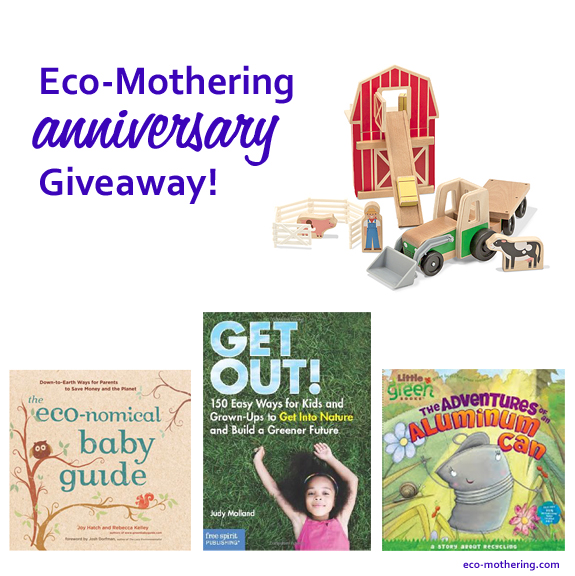
The folks at Microempowering heard about my anniversary and wanted to be a part of it. They’ve generously added 2 Melissa and Doug Whittle World Wooden Farm Sets to the giveaway package! The nine-piece set includes farmer, animals, hayloft chute and tractor. Keep one for your child and give one away as a gift.

In addition to the toys, one lucky winner will receive the three books below. With a children’s picture book, nature activities and a guide to saving green while going green, it’s a well-rounded collection for any eco-minded family.

The entire giveaway package is valued at $85. Enter now!

  • The Eco-nomical Baby Guide: Down-to-Earth Ways for Parents to Save Money and the Planet by Joy Hatch and Rebecca Kelly. Written in a funny, straightforward style, this book from two resourceful moms focuses on how to raise a baby while being budget and eco-conscious. From diapers to daycare and food to baby gear, the guide offer tons of practical tips.
  • Get Out! 150 Easy Ways for Kids & Grown-Ups to Get Into Nature and Build a Greener Future by Judy Molland. This well-rounded and easy-to-use handbook is full of fun activities to inspire a love of nature. Molland’s ideas are excellent for families and classrooms, encouraging people to get outside, learn about nature, and experience the world in new ways. This book is a Gold Mom’s Choice Award® Winner in the Adult Books: Outdoors and Nature. Ages 10 and up.
  • The Adventures of an Aluminum Can: A Story About Recycling by Alison Inches. Told in diary format from the point of view of an aluminum can, this fun and educational picture book shows the journey of the can from bauxite rock to manufacturing plant to garbage can to new life as a baseball bat. Ages 4-8.

Enter the giveaway below (open to U.S. residents only).

a Rafflecopter giveaway

Disclosure: Thanks to Microempowering.org for providing two Melissa and Doug Farm Sets to include in the giveaway. As always, all thoughts and opinions are my own.

Top 5 Ways to Celebrate World Water Day

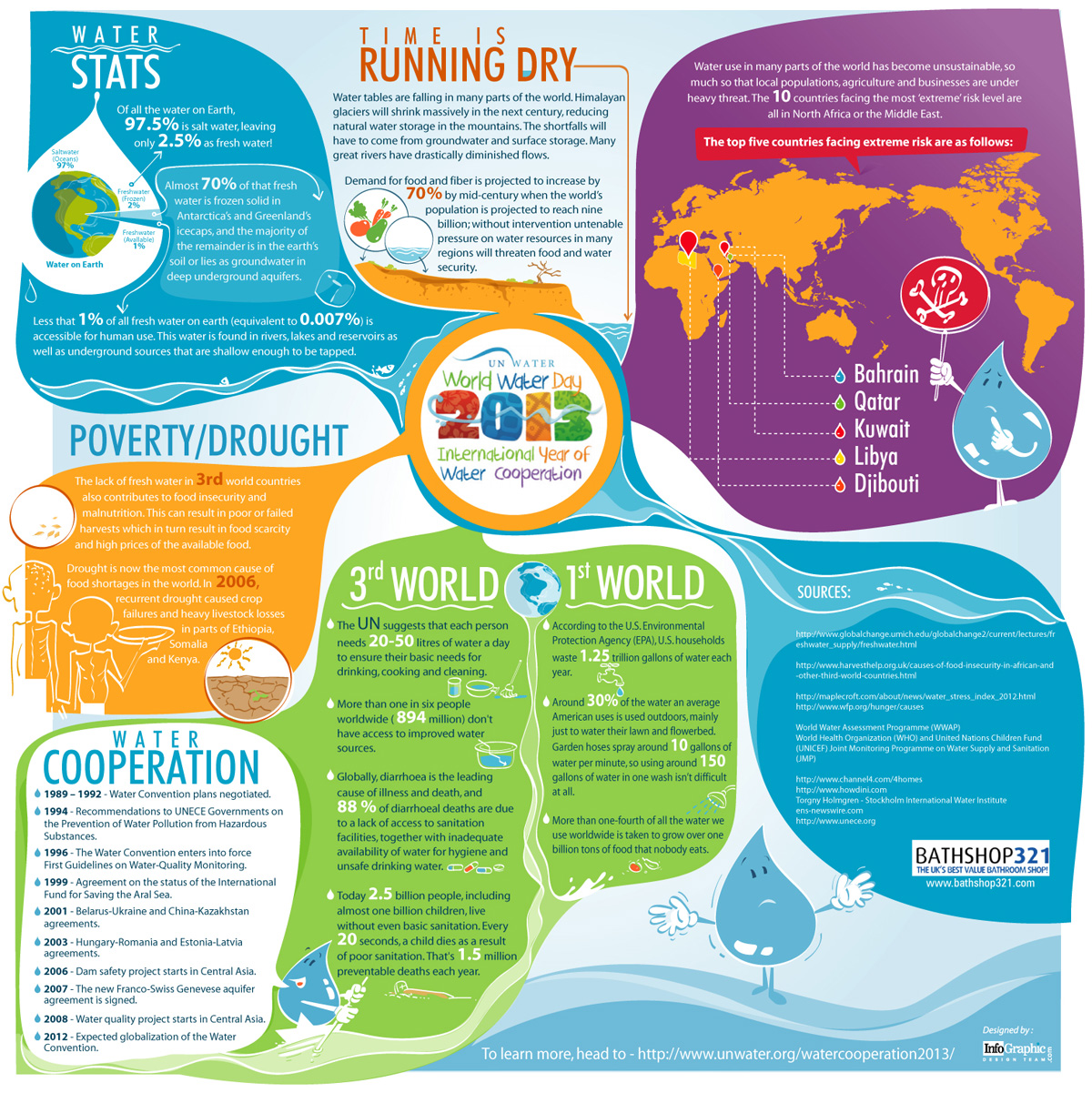
Designated by the United Nations in 1993, March 22 is World Water Day, a public awareness campaign focused on protecting the world’s fresh water supply. The theme for 2013 is International Year of Water Cooperation, aiming to promote the kind of global effort that negotiated 200 water treaties over the past 50 years.

Events are taking place worldwide on March 22. Find something in your area or choose one of the following ideas for celebrating World Water Day (WWD) as a family.

World Water Day 2013 Infographic

Infographic courtesy of: Bathshop321.com

  1. Join kids in the Walking for Water Initiative

    In developing countries around the world, many children must walk 6 km (or 3.7 miles) each day just to access clean water. To help other kids understand the impact of this, Walking for Water participants (ages 10-15) will trek 6 km while wearing a backpack of 6 liters of water. The event began in the Netherlands in 2003 and raised 1.2 million euros in 2010.

  2. Have a family competition to conserve the most water.

    Conservation is key. One bathroom retailer in the UK launched a Water Usage Survey with their customers and posted the survey results as well as tips for conservation (they also designed the above WWD infographic). Check them out as well as these 100+ household tips for your own family water usage competition. Up the stakes by allowing the winner to choose this year’s family vacation.

  3. Get crafty with recycled water bottles.

    Turn the caps into colorful magnets or pin cushions. Or try one of these craft options for repurposing plastic water bottles.

  4. Create art for the world.

    You and your kids can send WWD-related pictures, artwork or videos to the campaign on the WWD website, and they will be shared with the world via social media. The site also has downloadable posters and calendars, a logo builder and other fun stuff for the kids.

  5. Watch a movie.

    Such as the award-winning documentaries Blue Gold and Tapped. Both films focus on the privatization and corporate theft of the world’s dwindling water supply. Kids will prefer the animated five-minute The Story of Bottled Water, which looks at how the media convinced us that pricey bottled water is better than free tap water.

THE POWER OF POOP and Other Cool Ways People are Saving the Environment

Inspired by Elin Kelsey’s picture book Not Your Typical Book About the Environment, I share with you some inspiring actions and unique inventions sure to put a smile on your face. (If, like my daughter, you are just interested in the poop part, please scroll down :-)

Who knew thinking green could be so fun and trendy? Perhaps you or your child might come up with the next innovative earth-saving idea.

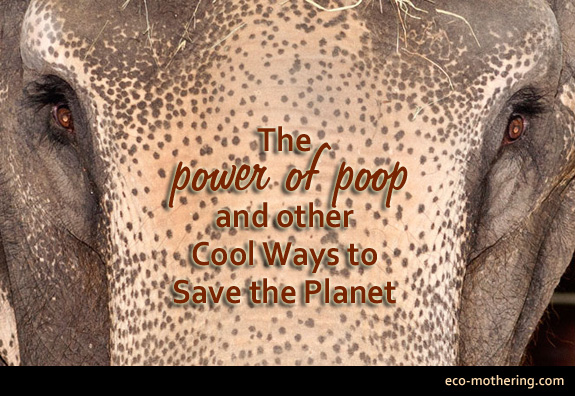
power-of-poop-elephant

Asian elephant “Kimbo” from the Denver Zoo.

FASHION FORWARD

  • Mom, can I eat my seat, please? Rohner Textil AG, a Swiss fabric company once facing bankruptcy due to the high cost of disposing of its toxic waste, re-engineered its product to create fabrics so clean, they’re edible. Some Lufthansa airplanes now use this fabric on their seat covers. I wonder if they taste better than the peanuts…
  • In the drive to develop more eco-friendly fashion, American scientists are experimenting with producing fabrics from farm byproducts like chicken feathers and rice straw. Some other strange but true materials making their way into the fashion industry include tree bark, bananas, seaweed, coffee grounds and cigarette butts.
  • Tesco, a British supermarket chain, joined forces with a fashion label to create a line of clothing from the supermarket’s waste, including food packaging, plastic bags and meat trays.
  • Nike’s Reuse-A-Shoe program collects old sneakers (any brand) and recycles the materials into soccer and football fields (rubber), tennis courts (foam) and the padding beneath basketball floors (fabric).

TECHIE TRENDS

  • How about a James Bond-style cell phone? Today’s eco-conscious designers focus on a process called active disassembly in which products are designed to break apart easily when exposed to heat or magnetism at the end of their life cycle. Product materials are then easily recovered for reuse or recycling. Following this philosophy, Nokia made a cell phone prototype that deconstructs in two seconds from the blast of a laser beam.
  • The European Union requires all businesses that manufacture WEEE (Waste Electrical and Electronic Equipment) to be responsible for recovering and recycling their products (no more shipping them off to third-world countries). This has created a huge career market for Green IT, an area our computer-savvy kids should do really well in.
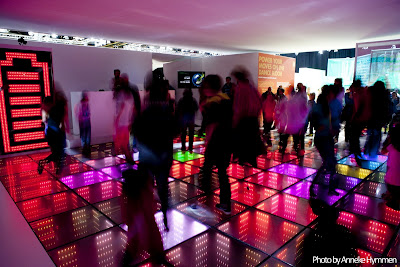
  • Rotterdam, the Netherlands, is home to Club WATT (now closed) where the energy of the dancers was transformed into electricity for the dance floor light show. WATT was just one example of a large-scale energy floor installation from Sustainable Dance Club, an effort dedicated to taking responsibility for our planet while having fun.

GARDEN GROWTH

  • Urban farming has exploded in popularity in cities across the world. Aside from providing local food, rooftop gardens reduce carbon dioxide and other greenhouse gases, insulate buildings and soak up stormwater runoff. The vertical farm is the next big thing. Researchers and designers are developing prototypes of skyscraper farms. Just one 30-story farm could grow enough food to feed 50,000 people a year!
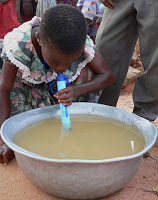
  • The Lifestraw® portable water filter allows people in impoverished countries to safely drink from their local water resources, even a muddy puddle.
  • Seed bombs allow guerilla gardeners to create greenspace in every concrete nook and cranny. Although the idea is not new, it has recently regained popularity, and bombers everywhere are transforming urban wastelands into vegetative sites. Learn to make your own seed bombs.

POOP POWER

Under the gentler moniker of ‘bio-gas,’ businesses around the globe are seeking ways to harness the power of human waste, which contains bacteria that releases methane gas.

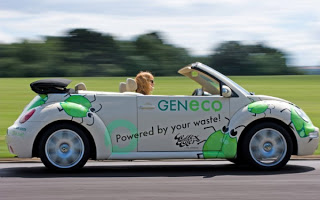
  • Using solid waste from 70 homes, British company GENeco powered a VW Bug (the Bio-Bug) to run 10,000 miles per year.
  • POOPOOPAPER™ uses animal dung to create their collection of notepads, journals and paper ornaments. You can even shop by poop type (elephant, panda or moose?).
  • The Swiss trap the methane from their sewage plants to make bio-gas for powering city buses and heating homes. Human poop powers streetlights and cooking gas in parts of India.
  • Using its own gasification technology, by 2013 the Denver Zoo’s newly refurbished “Elephant Passage” will convert more than 90% of its waste into sustainable energy. It used that same technology to introduce the world’s first poo-powered motorized rickshaw earlier this spring.

FUN TIDBITS

  • Bug Power What if we had to pay for the free labor that insects provide (pest control, pollination, waste decomposition, wildlife food)? Ecological economists recently determined the value of bug labor would be more than 57.3 billion dollars!
  • More than 25% of Stockholm’s city buses run on alcohol confiscated at the border. This is only one of many creative ways that Sweden is making good on its pledge to become the first oil-free country by 2020.

Children’s Birthday Parties are a Scam!

These events get parents to fork over numerous dollars on the latest toys and carve out 2-3 hours of precious weekend time. Why? So their own child can run wild, get a sugar high and beg for the same experience when her own birthday rolls around. The children love it, the parents buy into it, and I want to know: who’s responsible for this?

When I was a kid, birthday parties were just another reason to hang out with relatives in a backyard cookout. Sometimes I could invite a friend. I did receive gifts—usually clothes—but nothing special. Aunts and uncles smiled, remarked how big I was getting and disappeared for a drink refill. My cousins and I fueled up on soda and ran around the yard until it was time for the best part—the cake.

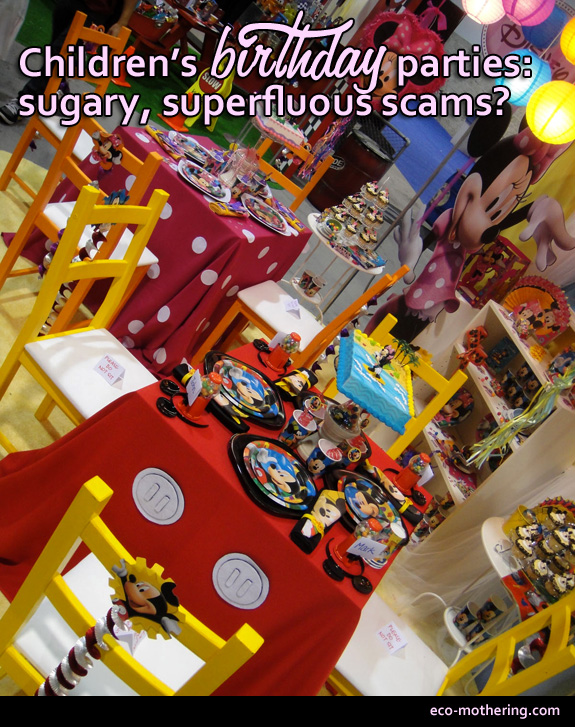
Nowadays, the preschool scene is an endless round of birthday parties, meeting the same kids and parents at the same gym, zoo or Chuck E. Cheese’s. And the gifts range from ridiculous (makeup sets for four-year-olds) to lavish (ensembles of the most popular toy and the latest award-winning game complete with matching bag). They are decorated like wedding cakes and often accompanied by flowers bouquets or talking cards. One thing hasn’t changed, however. The kids still run around and look forward to cake.

birthday-party-scam

Disney-themed party by Pop Culture Geek/Flickr

When Sofie was three, we officially entered the birthday party circuit. I remember her first friend’s party where I gaped at mothers arriving with giant balloon displays and three-tiered gifts wrapped to shiny perfection. It made my simple book encased in Sofie’s artwork quite drab in comparison. At the time, I still subscribed to the “less is more” philosophy and tried to keep Sofie impervious to the world of Licensed Plastic Playthings.

For her own third birthday —attempting to honor her princess obsession in a different way—I talked her into guest donations to one of Princess Diana’s favorite charities. This was in lieu of gifts. She didn’t mind, as long as there was cake. Once she turned four, she had completed a year of the party circuit and knew she was getting gypped.

I believe birthdays should be fun, but exactly when did they become so overblown? Often, that overblown quality goes straight to cookie cutter. I swear I’ve seen the same princess doll opened at no less than three parties. There’s nothing to ooh and ah about anymore. For the record, I do not like this tradition of opening gifts in front of everyone—thankfully, this seems passé in my party circuit. An eco-mother’s uniquely recycled giftwrap and educational book will never match the latest princess-fairy-superhero toy in all its plastic glory.

And what is my child learning from all this? Birthdays are about presents? Newer and bigger is better? The comparisons kill me. “Savannah got Diva Barbie for her birthday, so I want it too.” “Aiden invited the whole class to his party – why can’t I?”

Mostly because I refuse to shell out the big bucks that Aiden’s mom did. Party space rental prices are obscene (starting at $200 for just half the class) and that usually does not include food, decorations and favors. Attending these parties really adds up too. A year’s worth of friends’ birthday gifts can equal an airplane ticket (a cheap domestic flight on Southwest, but still).

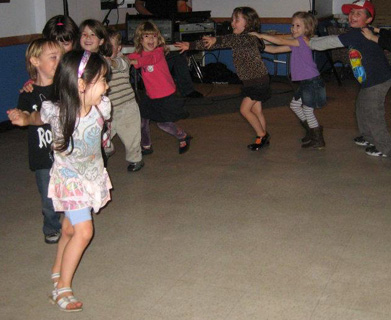
Sofie and her friend Thomas celebrate their
5th birthdays with a dance party
.

I must admit I sometimes succumb to the madness. I’ve given popular plastic toys wrapped in non-biodegradable paper. We threw Sofie a big fifth birthday bash at which she received piles of glossy gifts.

Yet, when I come across examples of kids thinking beyond the typical birthday party, I make a point to show it to my daughter. Kids who request charity donations or center their party around helping someone in need. And guess what? Sofie noticed my Defenders of Wildlife magazine one day and was inspired to have a Save-the-Wild-Animals themed party for her next birthday (still five months away). How cool is that? She still wants gifts, of course, but she also wants to tie in saving animals. I can work with that.

I wish birthday party moms could get together and agree to ending the overblown party cycle. Change it up a bit. Agree to eco-friendly party themes, a $10 gift limit or some fun theme like “gifts that rhyme with your child’s name.” If the cake is the best part, why not focus on that? Have each guest bring a cake or throw a cake-baking party or put the doll inside the cake (that caused a sensation at one girl’s party).

Enough of the business of children’s birthday parties! Let us return to the days of the home party: limited guest lists, space for running, drinks for the parents and lots of cake.

What’s in Your Eco Dream House?

This week we celebrated our third anniversary in our home. It’s our first house and I still love it, but three years feels like a long time considering our history. In the 13 years before buying this house, we inhabited nine different apartments across four states. (They exist in my memory as a string of street names: Daniel, Goodwin, Clark, Madison…)

That’s an average of 1.4 years per residence. So, it’s no wonder I am getting itchy for new surroundings. I’m not ready to move, but I’m beginning to compile a wish list for my next home. And since February is my month of fun, I’m dreaming of an eco house built from scratch.

eco-dream-house

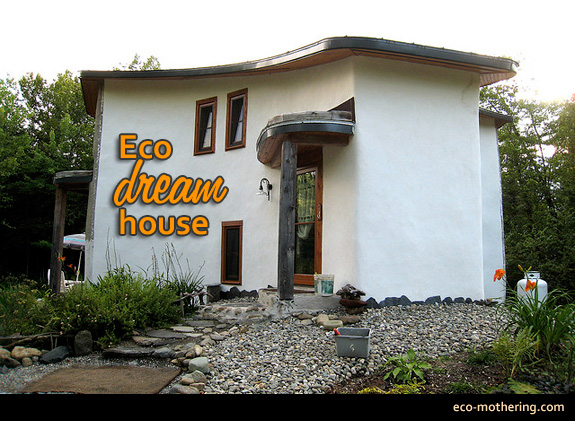
Straw bale house photo by colros/Flickr

Construction

Let’s begin with timber and straw bale construction, plastered with nontoxic, mold-resistant American clay walls. Straw? Yes, it’s come along way since the three little pigs. I first read about straw bale houses fifteen years ago, and I remain intrigued. Building with straw bale is affordable, requires minimal energy and provides excellent insulation (and supposedly you can do it yourself). Earthen walls can be sculpted over straw bales to create beautiful shapes and unique design features. I see curved walls, alcoves and window seats in mine!

Inside

There will be abundant natural light and circulation from eco-friendly windows and skylights. Photovoltaic panels on the roof supply our electricity. We’ll receive warmth from a wood stove and radiant heating installed beneath floors of bamboo and cork. Cork and bamboo are both fast-growing renewable materials. Cork is also hypoallergenic, durable and fire retardant. Floor coverings will include natural fiber area rugs in sisal, jute and wool as well as Flor™ carpet tiles for splashes of color.

Our bedding will be made of natural materials: wool, rubber and organic cotton. (I’ve always wanted to get a Lifekind mattress.) Wool regulates body temperature better than down and retains less moisture (less chance of mold and bedroom allergens).

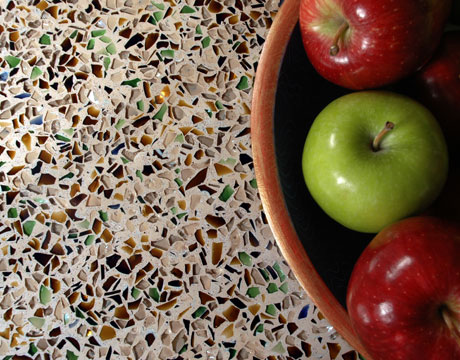
The kitchen will exhibit a gorgeous, eco-friendly countertop (I like the PaperStone or recycled glass ones in this slideshow) as well as cabinets and other furniture built from sustainable woods or wheat sheet – a formaldehyde-free fiberboard made of wheat chaff. As we do now, we’d use low flow water fixtures, no VOC paints and Energy Star appliances.

Outside

There will be no high-maintenance lawn. Instead the eco-friendly landscape will consist of gardens (veggie, flower, rain and zen), composite decking, trees and native shrubbery. Plus an area for outdoor entertaining.

While a hot tub seems like an energy-hogging luxury, there is a new trend in making hot tubs eco-friendly. The ones from Hydropool are apparently carbon neutral!

Sofie’s input in all of this? She asked for her own garden area and space for a horse. We are dreaming, after all.

What’s in your eco dream house?

Kids for Climate Change

Last Saturday, my family recognized the International Day of Climate Action by attending a rally at Waterplace Park. Attendance was depressingly sparse, whether from the weather or lack of interest, I do not know. Worldwide on that day, 181 countries participated in over 5,200 events calling for strong leadership on the climate crisis. I hope the other Rhode Island events pulled in more enthusiasm.

The point of the whole day was to demand strong action at December’s Climate Change conference in Copenhagen. That’s when a climate treaty (currently being worked on by the United Nations) is supposed to be finalized. The word at present is that the treaty is too weak to be effective. According to scientists, 350 Parts Per Million is the number that leading scientists say is the safe upper limit for carbon dioxide. It’s the number humanity needs to get back to as soon as possible to avoid runaway climate change. Right now we’re at 387.

As hard as it is to get people to change their habits, having an official, global agreement grounded in science seems a good place to start. Leaders need to send a strong message to people everywhere in order to have any chance at all. Because getting down to 350 will require big changes across the board.

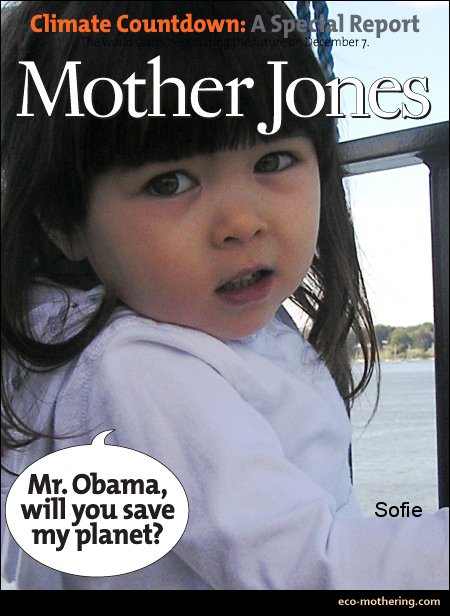
Mother-Jones-cover

So, you missed the Day of Climate Action but still want to make your voice heard? Put your child (or pet or yourself) on the cover of Mother Jones magazine, and send the image to your legislators (even to President Obama). Then spread the word to friends and family by emailing the cover image (might make a nice holiday card as well!)

Photos from Day of Climate Action
Some steps you can take to reduce carbon output.

The Pacific Garbage Patch: An Unflushable Toilet of Trash

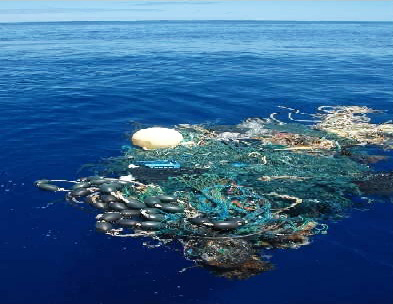
Do you know about the Great Pacific Garbage Patch? It’s the largest landfill in the world — a swirling vortex of marine litter in the central North Pacific Ocean. This massive trash gyre stretches from the coast of California, past Hawaii, almost as far as Japan and is now estimated to be twice the size of the continental United States!

Where did all this trash come from? From people, of course — people all over the world carelessly tossing their trash onto coastlines or streets and sidewalks where the rain eventually washes it into the waterways. The wind and ocean currents in the North Pacific are such that floating debris gets trapped into the gyre, an area that sailors avoid like the plague.

pacific-garbage-patch

Credit: Mario Aguilera / Scripps Institution of Oceanography

The Garbage Patch contains about 3.5 million tons of trash and most of that is plastic, which comprises about 90% of all marine trash. In some areas, the amount of plastic outweighs the amount of plankton by a ratio of six to one.

In 2008, Junk, a 30-foot vessel floating on a raft of 15,000 salvaged plastic bottles, made a three-month-long California-to-Hawaii voyage to raise awareness about plastics fouling our oceans. Some of their findings and photos are just astonishing. And highly depressing.

I know Sofie is at least attuned to trash. When we were at the PawSox game last weekend, she pointed out unreachable areas of the stadium where piles of bottles, soda cans, napkins, etc. had collected. “Look at all that trash, Mommy!” She wants to know why is it on the ground? Why not in a trashcan? And adds, “Somebody needs to clean that up!”

But cleaning can only go so far. Reducing the amount of trash in the first place is key. A concept I’m trying to explain to Sofie as she receives her drinks in a reusable container instead of the juice boxes she lusts after. I myself am still guilty of buying plastic water bottles and cheap plastic toys, among other things. And even though I recycle them, who knows how many fall along the wayside from can to truck to dumpsite? Better to just stop buying them altogether.

Watch a VIDEO of the Great Pacific Garbage Patch
FAQs about the Garbage Patch
Ideas on How to Stop Using Plastic