Top 5 Outdoor Family Vacations

  1. Treehouse Adventure

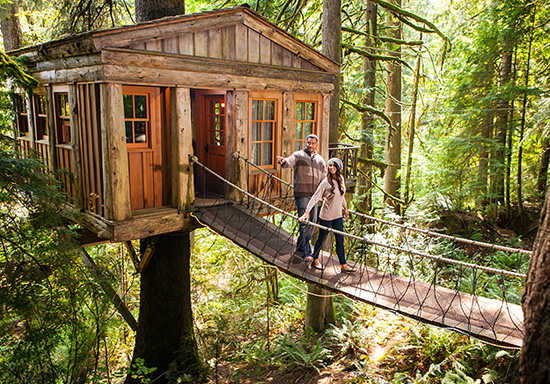
    Out’n’About is a unique “treesort” consisting of 36 acres of pasture and woods near Oregon’s Siskiyou National Forest. And, yes, you really do stay in a treehouse. Accommodations range from The Majestree some 47 feet up a Douglas fir (for six people with a kitchenette, loft and private deck) to the smaller Treeloon, designed to look like an Old West-style saloon, to the roomier Swiss Family Complex (a pair of treehouses connected by a swinging bridge). In some treehouses, you can choose to exit by swinging down a rope or sliding down a fire pole!
    vacation-out-n-about-treesort

    Credit: Adam Crowley/Blend Images/Corbis

    Area activities include treehouse ziplining, horseback riding, river rafting, arts and crafts, hiking, biking and lessons on building your own tree fort. Out-n-About is a family-run, family-friendly unique vacation.

  2. The Hills are Alive

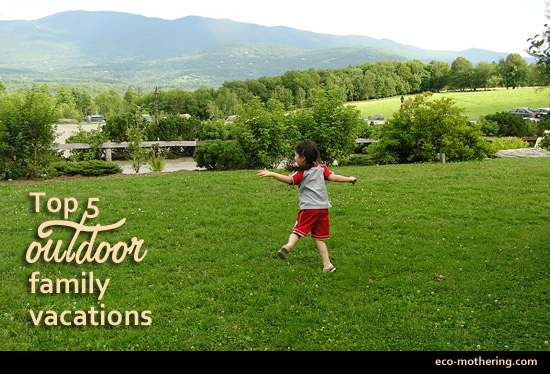
    Fans of The Sound of Music will love visiting this gorgeous site in the Green Mountains of Vermont. Built by the descendants of the famous von Trapps, the Trapp Family Lodge in Stowe offers spectacular views, quality skiing and family activities that range from outdoor summer concerts to mountain biking lessons from Maria von Trapp’s grandson Sam. The resort—located on 2,400 acres—includes a dog-friendly, 96-room Austrian-style hotel plus luxury villas and chalets to accommodate larger groups. Amenities include heated swimming pools, a fitness center and kids’ programs.
    outdoor-family-vacations-stowe

    Sofie re-enacts Maria’s iconic movie twirling on the grounds of the Trapp Family Lodge.

    The Trapp Family Lodge makes a great destination in every season: Area activities include wine tastings, maple sugaring, and horse-drawn carriage rides. Be sure to check out the von Trapp History tour. Enjoy skiing in winter, maple sugaring in spring, meadow concerts in summer and hiking the colorful foliage trails in fall.

    von-trapp-singers

    The von Trapp Family Singers toured the U.S. in the 1940s, settling in Stowe, Vermont.

  3. All-Inclusive Nature Resort

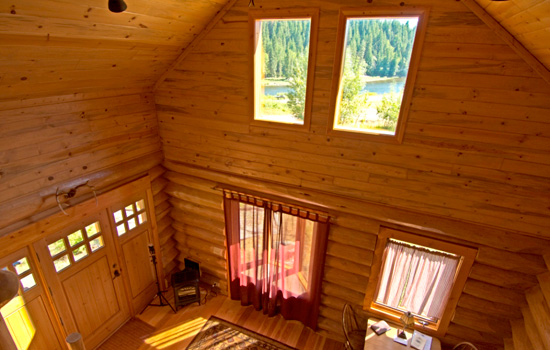
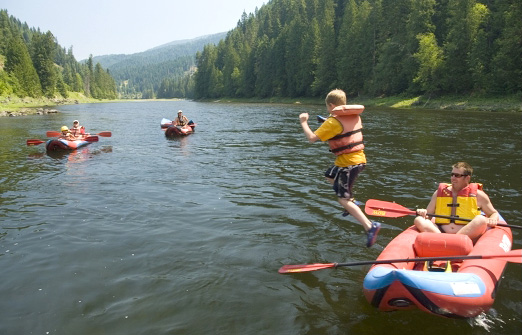
    All-inclusive getaways simplify things for families with kids. At River Dance Lodge in Coeur d’Alene, Idaho, one price includes accommodations, meals and activities. Situated in the Rocky Mountains near three designated Wild & Scenic Rivers and the historic Lewis and Clark trail, River Dance Lodge offer log cabins, private hot tubs and seasonal packages. Each day is a choose-your-own-adventure from kayaking and fly-fishing to horseback riding or floating down the Clearwater River. Professional guides assist in activities, most of which are accessible to kids ages four and up. I like that River Dance Lodge’s owners make a point of being green: recycling, green cleaning products, native plant landscaping and cabins built from dead-standing pine trees.
    vacation-river-dance-lodge2

    River Dance Lodge’s eco-friendly cabin made from dead-standing trees.
    vacation-river-dance-lodge

    Enjoying Idaho’s Wild & Scenic rivers. Photo: River Dance Lodge.

  4. Down on the Farm

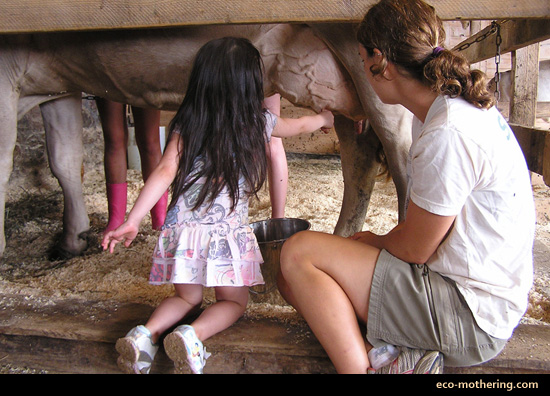
    Unplug and reconnect with the earth at a family farm stay. Long popular in Europe and Australia, this type of vacation is fairly new to America. It is a “working” vacation in the sense that participation in farm chores is expected. But that’s the fun of it! Collect eggs from hens, milk a cow, hug a lamb or learn how to make cheese. Enjoy a relaxing pace of life that follows the rhythm of nature instead of the rhythm of your smartphone.
    sofie-milking-cow

    Sofie milks a cow on a Vermont farm.

    Farms range from the rustic, composting toilet type to more luxurious farms with a jacuzzi bath. Area activities may include hay rides, berry picking, creek swimming or starry-sky bonfires. Find a farm stay vacation in your area.

  5. Yurtin’ for Certain

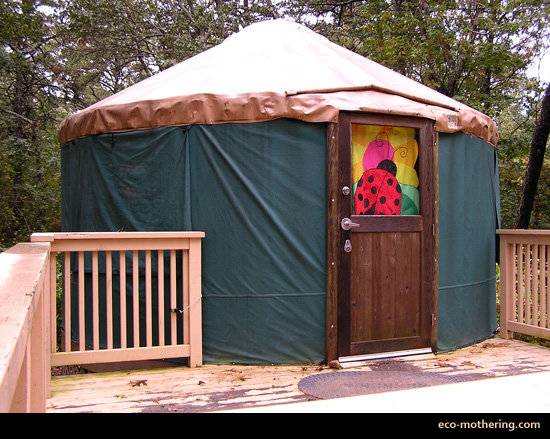
    Ever been in a yurt? A modern version of an ancient Mongolian tent, yurts are becoming more popular at campgrounds across the United States. It alleviates some of the stress of camping—like pitching the tent while toddlers run rampant or hoping that rain doesn’t soak into your sleeping bag at night. The enclosed structures resemble a cabin with beds, table and chairs, lights, electrical outlets, a porch and (in some places) heat. Everything but the bathroom. You still cook by campfire and enjoy nature.
    nickerson-park-yurt

    A yurt at Nickerson State Park.

    Cape Cod’s Nickerson State Park is one campground that offers yurts for just $30 per night. Located in the heart of the Cape, Nickerson is a pine and oak-forested park with access to eight freshwater ponds. A vacation on Cape Cod is relaxing and family-friendly with 560 miles of coastline and over 50 beaches, including the 40-mile National Seashore. Activities include hiking, biking, whale watching, museums, drive-in movie theaters and the Cape’s own baseball league.
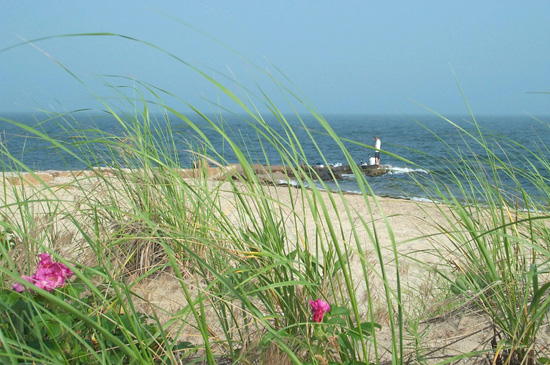
    Menauhant-Beach-cape-Cod

    Menauhant Beach, Cape Cod


This post is featured on Small Footprint Friday.


Eco-Friendly Pest Control for Your Garden

This is a guest post by Maya Rodgers.

Perhaps one of Mother Nature’s greatest mysteries is her ability to create and maintain highly balanced ecosystems in which animal, plant and insect life mutually thrive.

For me, gardening and eating what I grow is one of my most satisfying hobbies. But when pests make a mess of my garden, I get frustrated and discouraged. Perhaps you’ve experienced a similar feeling? Before turning to products that may harm your garden (and you), investigate natural options. Fortunately, there are many natural and eco-friendly remedies for pest control.

natural-pest-control-garden

Add Beneficial Insects

One of the simplest solutions to a garden pest problem is to introduce beneficial insects. Remember that not all bugs are pests—beneficial bugs ones will eliminate the pesky ones for you. Unlike pesticides, beneficial insects introduce natural harmony into your garden. Pesticides may kill pests, but they can also kill the beneficial insects, making your garden susceptible to the influence of nearby bugs who can now roam freely.

Ladybugs are one of the best known beneficial insects. They’re predators of common garden pests like aphids, mealy bugs, mites and other soft-bodied insects. Green lacewings are another good insect to have around. They love to feast on aphids and beetles that could potentially damage your garden. Also noteworthy—although not technically an “insect”—are nematodes.

There are many types of beneficial insects, and each targets a range of pests from white grubs, to cucumber beetles and flea larvae. Be careful when purchasing that you order the right kind. Buy beneficial bugs online or at a local gardening store.

Put Up a Wall

Another natural way to control pests in your garden is to divert, deter and deny them access to your goods. Try planting a barrier of spearmint, peppermint or pennyroyal around your garden to deter ants, aphids, cabbage moths and even rodents. You can accomplish this by setting up your garden in concentric rings or squares. Keep plants susceptible to pests on the inner spheres, and plant natural pest repellents like mint on the outside.

If you’d rather not reshape your garden, try one of these other natural pest barriers to deter the little garden ghouls. Sprinkle sand, lime or copper to keep snails away from your harvest. Cayenne pepper, charcoal, chalk and garlic all work effectively to deter ants. Neem oil (derived from neem seeds, an evergreen tree native to India) is a natural, non-toxic spray that kills many pests without harming birds, mammals or beneficial insects.

Lure Pests Away

Also consider the possibility of creating diversions for your garden pests. By creating something that the pests want (or think they want), it’s possible to lure pests away from precious plants. Lures come in many shapes and sizes, and may use scent, light or food to deter bugs. For example, a very simple snail trap that has worked for me in the past is to prop a pot upside down in your garden. Snails should come along and nestle in your pot’s shade. Once they have gathered, you can pick up the snails and deposit them elsewhere. A good lure for slugs is a bowl of beer. Bury a small bowl filled with beer at dirt level so the slugs can easily crawl in. Attracted to the beer, the slugs will climb inside the bowl and drown.

There are many more options for naturally dealing with pests in your garden. Remember, your goal is to keep your garden toxin free and create balance in the ecosystem. Good luck!

About the author: Maya Rodgers works as a pest control consultant and specializes in termite treatment. She’s had extensive pest-related gardening experiences, both in her own and others’ backyards. This season, her peppers and tomatoes are doing great, but her Brussels sprouts aren’t flourishing as well as she’d like. Maya muses about many random things at www.petsandpests.com.

This post is featured at Small Footprint Friday and Frugal Days, Sustainable Ways.


How to Build a DIY Fairy Garden

This is a guest post from Jessica Nattamai.

Gardens are more than a place to grow food and flowers. They can become an imaginative space for kids to take part in creative play while enjoying the fresh air and sunshine. Furthermore, digging in the earth allows children to be in immediate contact with diverse life forms: worms, plants and cocoons can all be discovered.

Luckily, most children aren’t hesitant to get their hands dirty. All they really need is a little inspiration. Creating a fairy garden is the perfect project to inspire imagination for the whole family. Simply adding stones, small plants or homes turns an ordinary garden into a place of magic!

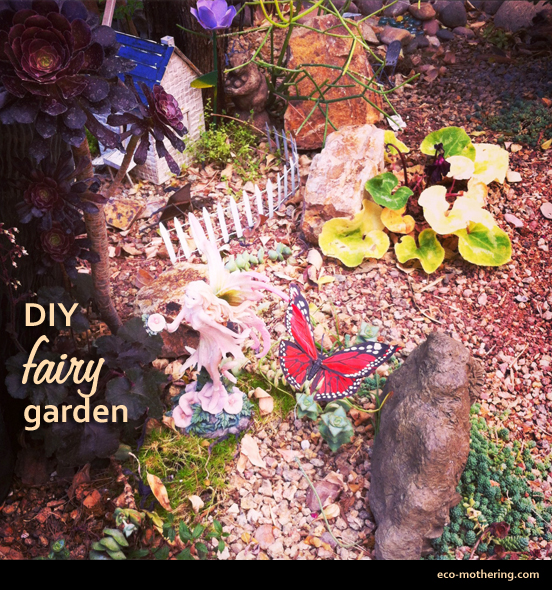
fairy-garden-1

Photo and fairy garden by Jesse Nattamai

Here are a few tips on making a fairy garden.

Collect Your Materials

  • A garden, natural space or a container with a drainage hole (A wine barrel, tin basin, planter or even a salad bowl will work well.)
  • Stones, pebbles, water, bark, twigs, leaves and other natural items for “furniture”
  • Plants like boxwood, alyssum, lithodora, Irish moss, and living-rock plants
  • Handmade or store-bought accessories like miniature fairy statues, fences, toadstools, butterflies, bees, gnomes, bird houses and benches
  • Potting soil
  • Earthworms (these are optional, but they make great aerators and can spark a child’s curiosity)

Plan the Design

Decide whether you would like to create the fairy garden within an already existing garden, in a natural setting (like a wooded area) or in a container. Add potting soil to the area you choose, and allow children to “draw” the fairy garden layout using a twig or pencil. Decide where you want to place fairy homes, trees, hills, valleys or rivers… get creative! Be mindful of scale as you plant the greenery—you want the area to look like a miniature garden.


Tips on Planting

Remove enough potting soil from the area to accommodate the plants you’ve chosen, ensuring the top of the root ball is about an inch from the top of the pot. Also, be sure to gently feather the roots apart before planting, and afterwards press the soil around the roots to keep the area firm.

You can use chunks of moss and contour it over the landscaped hills and valleys, or around a fairy pond or tree. Consider leaving space for a rock path. Finally, decorate the area with handmade, store-bought or natural fairy “furniture.”

Now, let the magic happen! Watch as your children’s imaginations kick into full gear as they pretend fairies are laughing, playing and keeping house within the gardens. The next time you want your children outdoors, you can always wonder aloud what those fairies are up to…

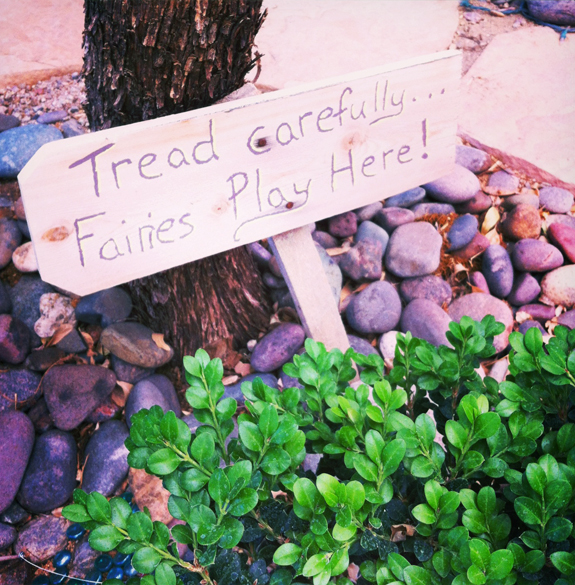
fairy-garden-2

Photo and fairy garden by Jesse Nattamai

About the author: Jessica Nattamai is a new mom who moonlights as a green living and gardening writer while her baby is asleep. She works for Humble Seed, a company dedicated to providing the highest quality heirloom, non-GMO, non-hybrid and organic garden seed kits.


Top 5 Things You Didn’t Know About the Yellow-tailed Woolly Monkey

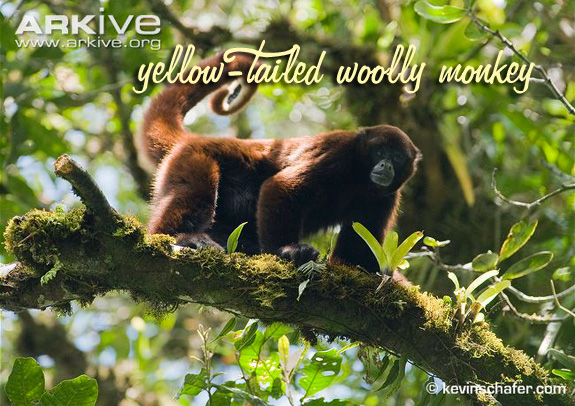
yellow-tailed-woolly-monkey

  1. The yellow-tailed woolly monkey was once considered extinct.

    The species was first discovered in northern Peru in 1820; however, between 1926 and 1973, not a single yellow-tailed woolly monkey was sighted, causing scientists to deem the animal extinct. Then in 1974 primatologist Russ Mittermeier rediscovered small groups of the monkey in the highlands of Peru. Still, the yellow-tailed woolly monkey is still considered one of the rarest mammals in the world. (Eco-Mothering was able to adopt one! See the video at the end of this post.)

  2. They are named for a distinct yellow stripe of fur.

    It runs along the underside of their tails and is what separates them from other species of woolly monkeys. Their fully prehensile tail is used as a fifth limb for climbing, eating and leaping (up to distances of 15 meters).

  3. They are a male-dominated society.

    They usually live in groups of 4 to 30 monkeys that include males (one dominant), females and offspring. The omnivorous animal exhibits a charismatic and playful personality: frolicking in the forest canopy and throwing fruit at the heads of poachers. As observed in a 2011 scientific study, the adult mothers spend the least amount of time resting (45% less than males)—a very similar statistic to human adult mothers!

  4. They make a barking sound like a puppy.

    The yellow-tailed woolly monkey will “bark” when it is excited or as an alarm call about potential predators. The high-pitched sound can be heard over long distances and may continue for periods of up to 30 minutes.

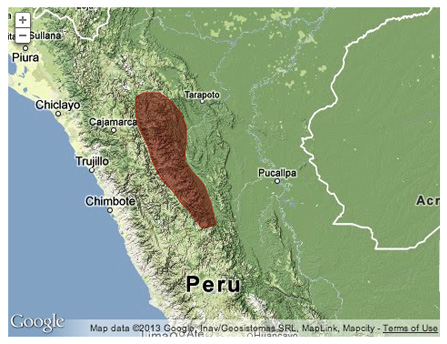
  5. They only live in the cloud forests of Peru.

    YTWM-habitat-mapThe species prefers the tall trees (35-40 meters), the steep ravines, the chilly air… and is unable to adapt to other habitats. The inaccessibility of the yellow-tailed woolly monkey’s habitat is what protected the species for so many years. However, increased human interference (logging, development, hunting) is destroying the South American rain forest, and the Critically Endangered species remains on the edge of extinction. Currently, there are fewer than 250 yellow-tailed woolly monkeys left in the world.

For the Kids: An online coloring page of the yellow-tailed woolly monkey. Color it in, and save it to your computer. And make sure to watch the kid-centric video below!

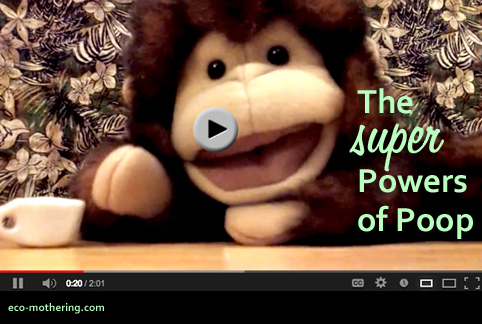
VIDEO: As rare as they are, we have adopted a yellow-tailed woolly monkey named Eek. Sofie loves him. Eek also happens to be eco-conscious and pretty handy with technology, so we put him to work. Check out the monkey’s first video about the Super Powers of Poop.

Eek-super-powers-of-poop

Want to help? You can donate to EDGE (Evolutionarily Distinct and Globally Endangered), a conservation group focused on protecting species such as the yellow-tailed woolly monkey.


Giving Back: How My Daughter is Saving the Chimps One Friend at a Time

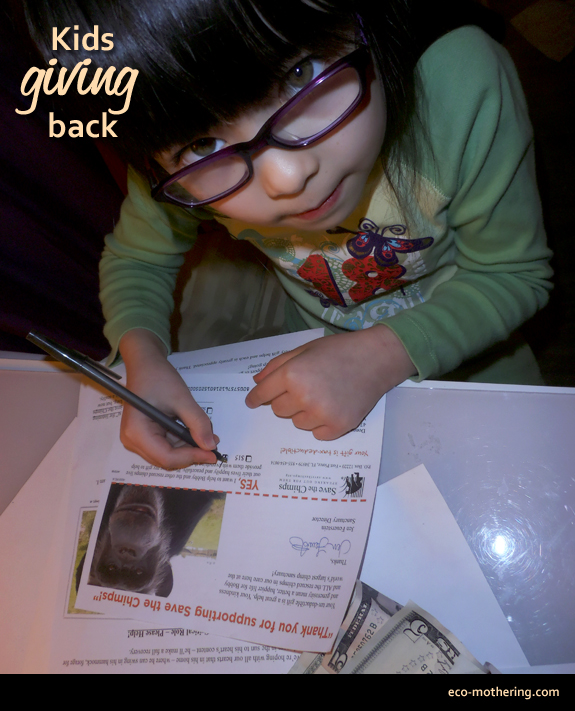
My six-year-old made her first charitable donation this year. She decided to save the endangered chimpanzees.

kids-giving-back-save-the-chimps

She’s an animal lover so the organization did not surprise me. The giving did. I donate regularly to wildlife organizations. She sees the catalogs, the free gifts. One day an appeal from Save The Chimps arrived in the mail. I did not know them, but asked Sofie—who had recently shown an interest in chimps and monkeys—if she wanted to donate.

She immediately said yes. I explained this meant giving some of her money. (I offered to split the $25 donation with her.) We also discussed why the chimps needed saving. She wanted in. She opened up her piggy bank. I wrote the check.

I thought that was the end of it.

A month later, the mother of one of Sofie’s school friends thanked me for my daughter’s activism.

“Huh?” I said.

“Yes,” she said excitedly. “My daughter came home last night in an uproar about people testing makeup on chimpanzees! She wants to send money to help them… and she even got her grandmother to donate to the cause.”

“Huh.” I said.

Sofie’s kindergarten teacher expounded. Apparently, Sofie had instigated a “lets’ save the animals” campaign among her classmates. She told them about the plight of the chimps, how sad she was that they were being taken from their families and put into cages for experiments.

My daughter is becoming a social activist at school, yet all I hear at dinner is how she played Star Wars at recess.

Giving Back

I’m proud of her, of course, so much so that I have been inspired to expand my charitable contributions to Eco-Mothering. Every season I’ll choose a charity to receive 5% of the profits made from my blog that quarter with a minimum donation of $25.

You can keep up to date on the current charity here, and even make your own donation.

Top 5 Lesser Known Green Charities

Some people don’t get around to making charitable donations until the end of the year when they’re in the spirit of holiday giving. Others think of it as a write-off during tax season.

Whenever you do it, charitable giving is a wonderful habit to adopt. So here are my top 5 organizations that focus on environmental or sustainable work. There are many great charities out there, but I opted for mentioning some of the lesser known ones who could also use some financial support.

  1. Safer Chemicals, Healthy Families This coalition of organizations and individuals works to inform and protect families from toxic chemicals. They’re working with legislators to pass the Safe Chemicals Act and create smarter limits on the things that go into the everyday products we use. DONATE.
  2. Earth Day Network Developed out of Earth Day, the EDN works with 192 countries to “broaden, diversify and mobilize the environmental movement.” Earning a 4-star rating on Charity Navigator, they have concerted efforts to promote environmental education and to green all of America’s K-12 schools within a generation. HELP THEM OUT.
  3. Trees, Water and People Based on the philosophy that involving those in need is the best way to help them, this organization partners with local groups to help communities manage their natural resources. They work primarily in Latin and North America in areas of reforestation, renewable energy and watershed protection. DONATE.
  4. Noah’s Ark Another 4-star Charity Navigator-rated organization, Noah’s Ark houses both an animal sanctuary and a children’s home. It provides humane, responsible treatment of wildlife and brings children and animals together to promote rehabilitation for both parties. SEND A GIFT.
  5. Kiva I discovered this organization last summer through my 40 Days to 40 blog, and I made a loan that has since been repaid in full. Kiva connects microfinance institutions with regular people to promote lending and opportunities around the world. My donation, for example, helped a 69-year-old Filipino woman stock her general store. Since she paid it back, I can now loan that money to someone else who needs it. You can choose from a variety of sectors (arts, education, agriculture, health, etc.) and receive reports on the loan’s status. MAKE A LOAN.

Want to make a donation in someone’s name but not sure which charity? Give them a TisBet Charity Gift Card where they choose the charity of their choice.