This is a guest post from Jessica Nattamai.
Gardens are more than a place to grow food and flowers. They can become an imaginative space for kids to take part in creative play while enjoying the fresh air and sunshine. Furthermore, digging in the earth allows children to be in immediate contact with diverse life forms: worms, plants and cocoons can all be discovered.
Luckily, most children aren’t hesitant to get their hands dirty. All they really need is a little inspiration. Creating a fairy garden is the perfect project to inspire imagination for the whole family. Simply adding stones, small plants or homes turns an ordinary garden into a place of magic!
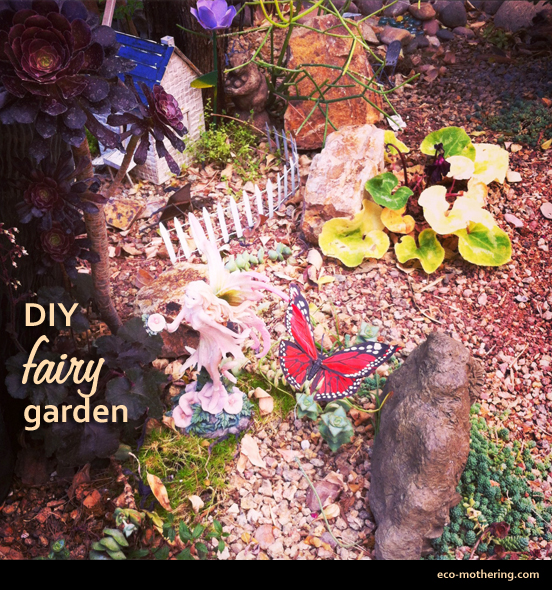
Photo and fairy garden by Jesse Nattamai
Here are a few tips on making a fairy garden.
Collect Your Materials
- A garden, natural space or a container with a drainage hole (A wine barrel, tin basin, planter or even a salad bowl will work well.)
- Stones, pebbles, water, bark, twigs, leaves and other natural items for “furniture”
- Plants like boxwood, alyssum, lithodora, Irish moss, and living-rock plants
- Handmade or store-bought accessories like miniature fairy statues, fences, toadstools, butterflies, bees, gnomes, bird houses and benches
- Potting soil
- Earthworms (these are optional, but they make great aerators and can spark a child’s curiosity)
Plan the Design
Decide whether you would like to create the fairy garden within an already existing garden, in a natural setting (like a wooded area) or in a container. Add potting soil to the area you choose, and allow children to “draw” the fairy garden layout using a twig or pencil. Decide where you want to place fairy homes, trees, hills, valleys or rivers… get creative! Be mindful of scale as you plant the greenery—you want the area to look like a miniature garden.
Tips on Planting
Remove enough potting soil from the area to accommodate the plants you’ve chosen, ensuring the top of the root ball is about an inch from the top of the pot. Also, be sure to gently feather the roots apart before planting, and afterwards press the soil around the roots to keep the area firm.
You can use chunks of moss and contour it over the landscaped hills and valleys, or around a fairy pond or tree. Consider leaving space for a rock path. Finally, decorate the area with handmade, store-bought or natural fairy “furniture.”
Now, let the magic happen! Watch as your children’s imaginations kick into full gear as they pretend fairies are laughing, playing and keeping house within the gardens. The next time you want your children outdoors, you can always wonder aloud what those fairies are up to…
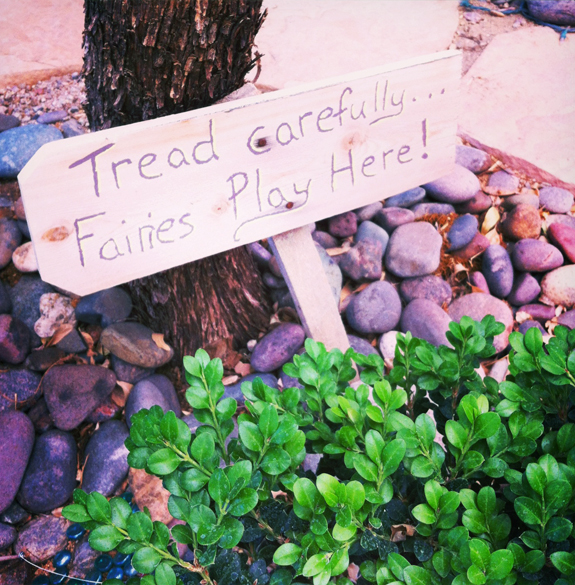
Photo and fairy garden by Jesse Nattamai
About the author: Jessica Nattamai is a new mom who moonlights as a green living and gardening writer while her baby is asleep. She works for Humble Seed, a company dedicated to providing the highest quality heirloom, non-GMO, non-hybrid and organic garden seed kits.
This post is featured on Frugal Days, Sustainable Ways.