


I recently read that August is the most popular birthday month (and today happens to be mine!), which means there are thousands or even millions of birthday parties taking place this month. I love birthdays, and I love a good party. However, all the disposable waste that parties can create is a darn shame, especially when much of it can be avoided.
When it comes to children’s birthdays, most people are in the habit of following the majority, which means paper plates, cups and décor in a popular licensed character theme and prettily wrapped presents of the latest plastic doll or truck. Nearly all of this stuff, including the cheap plastic party favors, gets tossed within a few hours. However, if you knew the effect all this paper and plastic waste had on trees, animals, our health and the planet, you might consider eco-friendly alternatives. (Which would likely save you money, too.)
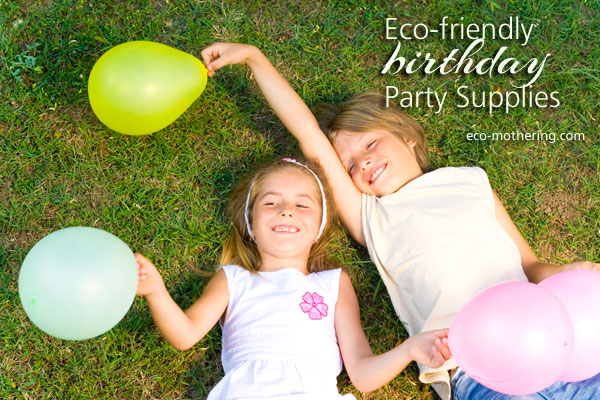
Nobody’s perfect; my family is certainly not paper and plastic-free. But we have changed some of our party habits, and it’s easy to do.
Need inspiration? The stats below give you a glimpse into where all that party waste comes from…and where it goes. You might be astounded by some of these facts, as I was. Then scroll past the stats for eco-friendly alternatives to common birthday party supplies.
Stats on Paper:
- Worldwide, 42% of trees cut down are used to make paper.
- Half of the paper America consumes is used to wrap and decorate consumer products. ($9.36 billion in giftwrap sales in 2010—more than the combined GDP of Africa’s nine poorest countries.) And due to its dye and lamination, most giftwrap is not easily recycled.
- Paper accounts for 25% of landfill waste and 33% of municipal waste.
- With all the paper we waste annually, we can build a 12-foot high wall of paper from New York to California.
- Three gallons of water is used to make 1 sheet of paper. If we each sent one less card, we’d save 50,000 cubic yards of paper.
- It takes 12 gallons of water to produce 1 pack of 22 dinner plates. And they can’t be recycled due to the wax coating usually applied to prevent leakage.
- 20 million trees are cut down each year to make paper cups that, while recyclable, include chemicals and fossil fuel-derived plastics (chlorine dioxide, petroleum and polyethylene) in their manufacture.
Stats on Plastic:
- It takes 500-1,000 years for plastic to degrade. A standard disposable plastic fork or spoon is made from petroleum and can take anywhere between 10 and 100 years to decompose.
- We have produced more plastic in the past ten years than we have over the past century. Much of that is thrown away every year—enough plastic to circle the earth four times.
- Plastic constitutes approximately 90% of all trash floating on the ocean’s surface.
- One million sea birds and 100,000 marine mammals are killed annually from plastic in our oceans. 44% of all seabird species, 22% of cetaceans, all sea turtle species and some fish species have been documented with plastic in or around their bodies.
- 93% of Americans age six or older test positive for BPA (bisphenol A), a plastics chemical that can act as an endocrine disruptor, particularly in children.
- Flexible plastics (like party tablecloths) are typically made with the chemical DEHP or di(2-ethylhexyl)phthalate, which gets absorbed into our bodies and may be a human carcinogen.
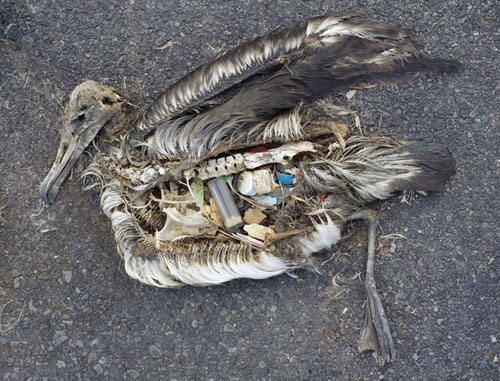
Remains of an albatross chick on Midway AtollNational Wildlife Refuge
with ingested plastic marine debris.
Photo by Chris Jordan (via U.S. Fish and Wildlife Service Headquarters) / CC BY 2.0
Birthday Party Supplies – Green Alternatives
So what’s a mom to do? It may seem overwhelming to tackle every piece of paper and plastic used in your celebrations, so just start with one or two changes. Start with the invitations. You’ll see that some of the supply options, such as investing in fabric for napkins and tablecloths, are a one-time expense that you can easily reuse every year.

- PARTY INVITATIONS AND BIRTHDAY CARDS
- Send electronic invitations (Evite, Paperless Post and Punchbowl are free options).
- Use recycled paper invitations or, better yet, plantable seeded cards.
- Have kids make their own birthday cards or drawings instead of store-bought ones.
- Instead of a card, paint a pretty stone with a child’s name and age or create an audio mp3 with a personal birthday message.
- GIFTWRAP
- Wrap your gift in fabric scraps, newspaper or your child’s artwork.
- Make the wrapping part of the gift (a bandana or long-sleeved T-shirt tied around a book).
- Buy cloth bags that can be reused by the recipient for parties or shopping trips.
- Instead of crinkled ribbon, decorate gifts with twine, wool yarn, funky shoelaces or bits of nature (twigs, shells, colorful leaves).
- TABLEWARE
- Buy plates and cups made from recycled content (there are a variety of compostable and biodegradable plates and cups out there today).
- For a home party, use real plates, mugs and cutlery. The water used to wash them afterwards is much less then the water used to manufacture paper plates.
- Don’t use dishware. Choose simple finger foods on a few serving plates. Party outside so a few dropped crumbs won’t matter.
- Buy or make cloth napkins.
- Buy a fabric tablecloth (bold patterns hide spills better) or go with a naked table (it’s just going to get spilled on anyway).
- Buy plates and cups made from recycled content (there are a variety of compostable and biodegradable plates and cups out there today).
- DECORATIONS
- Decorate with cloth banners, colorful flowers, wind socks, fairy lights, etc. Don’t want to do it yourself? You can find green party suppliers online who sell reusable birthday kits that include a banner, table runner and goodie bags.
- Choose an outdoor setting with seasonal nature as the décor.
- Skip the paper party hats. Maybe make one special birthday hat for the guest of honor, but create your own outrageous one from fabrics and materials around the house.
- Use ribbon dancers or dancing inflatables instead of balloons. Even though pure latex balloons are supposed to be the better biodegradable option to mylar, they are still harmful to wildlife (and pets) who often ingest them.
- Use your laptop to create and project an electronic display with music onto a wall.
- GOODIE BAGS AND PARTY FAVORS
- Buy reusable cloth bags or sew fabric bags.
- Choose non-plastic favors that will last longer than a week – books, art supplies, cooking supplies, collected items from nature, mini games, a CD of favorite songs, tickets to something.
- Create a favor that has its own container such as terra cotta flower pots filled with plant seeds, mini books or art supplies.
- Forgo the individual party favors for donations made in their names to a favorite charity (works better with older kids). Younger kids are usually happy with food. Or print out memorable photos from the party for everyone to take home.
- JUICE BOXES
- Instead of individual boxes, buy large bottles of juice and pour into reusable cups.
- Serve homemade drinks (lemonade, iced tea, water with fruit slices) in glass pitchers.
- Choose the most eco-friendly juice box you can find.
- Have a recycling bin set up for empty juice boxes, which are recyclable in most communities.
Stay tuned for Part 2 of my series on Eco-Friendly Birthday Parties where I’ll offer ideas for green themes and alternatives to a traditional party.
















Excellent article with astounding stats and a topic that is begging for attention. So, thank you for this.
We are an online store of earth friendly products and have come up with a gift idea for kids Birth Day parties that echos the sentiments expressed in your article. This gift pack is a set of 6 re-usable shopping bags made of 100% organic cotton bags and a small box of fabric painting markers. Kids can use the bags to paint just like coloring book. One bag is for the birth day boy or girl and 5 bags for other kids to take home at the end of party. Parents can proudly use their children’s “masterpiece” shopping bags for many years. We would like to team up with you to market the gift set. Please let me know if you are interested and I can share more details.