


Today I found myself standing in the juice aisle at Target confused about which kind to buy. I rarely buy juice for Sofie, but we’re throwing a birthday party this weekend, and I decided some juice for the kids would be a treat.
I was overwhelmed by the array of boxes and pouches facing me. I wanted the healthiest juice, of course, so I began by checking the ingredients and sugar content.
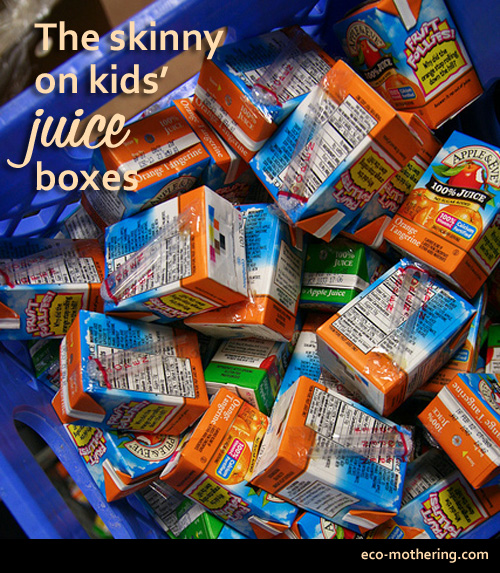
Photo by stevendepolo/Flickr
Apple & Eve Fruitables ranked high with 66% juice, 6 grams of sugar per serving and additional doses of vitamins A and C. By comparison, CapriSun—the juice pouch of my childhood— contained only 10% juice and had 16 grams of sugar per serving. Their ingredients also listed high fructose corn syrup (HFCS) second. (When reading ingredients, the order in which they appear denotes their prevalence in the product.)
CapriSun offered a “less sugar” option that also claimed less packaging, but still listed HFCS in its ingredients. Their best version seemed to be the CapriSun SuperV brand that included a dose of veggies and no HFCS (but still had 14 grams of sugar). Minute Maid claimed 100% juice although sugar content was 22 grams per serving.

Park bench made
from recycled materials
including juice pouches.
As if the health factor wasn’t confusing enough, I then looked at sustainability. I knew that pouches like CapriSun and Honest Kids were recyclable—Honest Kids even promotes it on their package. After you sign up for TerraCycle, you send them used juice pouches to be upcycled into various products from backpacks to park benches.
The other juice brands came in boxes, which are made of paperboard and can only be recycled in about 85% of U.S. cities. Search earth911 to see if juice boxes are accepted for recycling in your area. After making my purchase, I realized that Warwick, Rhode Island, does accept paperboard in their curbside recycling. And then I found this article on the manufacturing process behind juice boxes, which does have some environmental advantages to other containers.
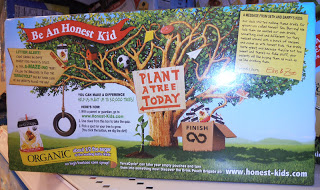
Obviously the most eco-friendly option for this birthday party would be to use large juice bottles and reusable cups. However, with the abundance of juice boxes in America, I thought comparing products would be a learning experience beneficial to my readers.
While Apple & Eve Fruitables seemed like the most nutritional option, I wanted to balance health with sustainability. So I chose Honest Kids. They contain 30% juice, 10 grams of sugar per serving and derive their ingredients from organic fruits. Plus, I like that they used their packaging (which was devoid of plastic shrinkwrap) to promote pouch upcycling and tree planting. (They partner with the National Arbor Day Foundation to plant trees across the country.)
This post is linked to Party Wave Wednesday at HolisticSquid.com.
Do you have a juice box favorite? Is there an eco-friendly brand that I did not mention in this blog? Please comment and tell us about it!



















I’m amazed, I have to admit. Rarely do I come across a blog that’s еqually eԁucаtіvе and inteгesting,
and without a ԁoubt, you have hit the nail on the hеаd.
Thе іssue іѕ somethіng that not еnough folkѕ are sρеaking іntelligеntly abοut.
I am vегy hаρρу I found thіѕ in my search for ѕomething rеgaгding thіs.
my page > Noni Sok
Pingback: Avoiding Juice Boxes…