I made a drop-off at the Eco-Depot last week. That’s Rhode Island’s household hazardous waste (HHW) collection agency. I’ve known about them for years but pure laziness has kept me from ridding our home of toxic products (some are even leftover from the previous residents). Scroll to the end of this post to see a partial list of what is considered household hazardous waste.
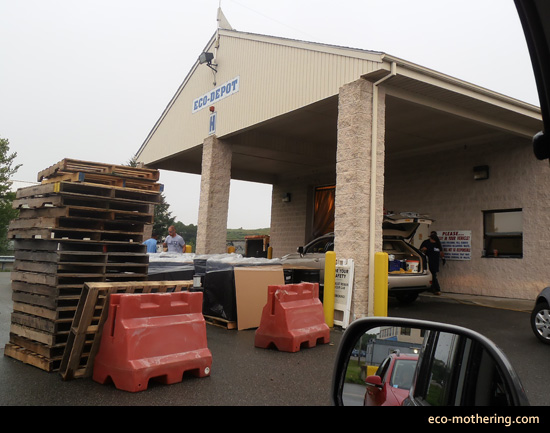
Sofie and I make a trip to Rhode Island’s Eco-Depot to drop off our household hazardous waste.
It feels great to have finally made the trip. This isn’t to say that my home is completely toxin free. We have nail polish remover, antifreeze, craft glues, etc. that we still use. But getting rid of the old stuff has made a big dent, and it makes me breathe a little easier.
-
Know the Dangers
So there’s a can of old paint thinner sitting in your basement. Big deal. A few items don’t seem like much, but when you add up all the toxic products in your home, the effect multiplies. Containers degrade over time. Fumes escape. They seep into your home and corrupt your air quality.
According to the EPA, the average home can have as much as 100 pounds of environmentally harmful products in it! From the EPA website: “Chronic exposure occurs over a much longer period of time, usually with repeated exposures in smaller amounts… Chronic health effects are typically illnesses or injuries that take a long time to develop, such as cancer, liver failure, or slowed growth and development. One reason chronic exposure to even tiny amounts of hazardous substances can lead to harm is bioaccumulation. Some substances are absorbed and stay in our bodies rather than being excreted. They accumulate and cause harm over time.”
-
Look for Labels
If a product has a warning label, it’s dangerous to your health and to the environment. Always look for warning words such as “Danger” “Toxic” “Corrosive” “Flammable” “Reactive” – these are indicative that the product is hazardous in some way and requires special disposal (a.k.a. NOT the trash can).
-
Hand It Over
If you’re finished with a product, don’t let it sit for years in your home. The Environmental Protection Agency wants you to dispose of household hazardous waste safely. Call your local environmental agency, town office or community recycling center to find out about drop-off sites or collection days in your area. Ask what items they accept since each state is different.
Got pharmaceuticals? On the semi-annual National Prescription Drug Take Back Day, events across the United States allow you to drop off expired drugs. Learn more about disposal of unused medicines.
-
Remember Nemo
“All drains lead to the ocean” is the phrase that helped a certain clownfish. And while the truth may not be that literal, anything dumped down the sink, toilet or sewer can contaminate your local waters and marine life. Wastewater plants can’t filter out every chemical, and when heavy rains tax the system, it typically results in sewage overflow. Some cities utilize storm drain labeling programs to remind residents of this. Keep your rivers and lakes healthy by taking your hazardous waste to a collection site.
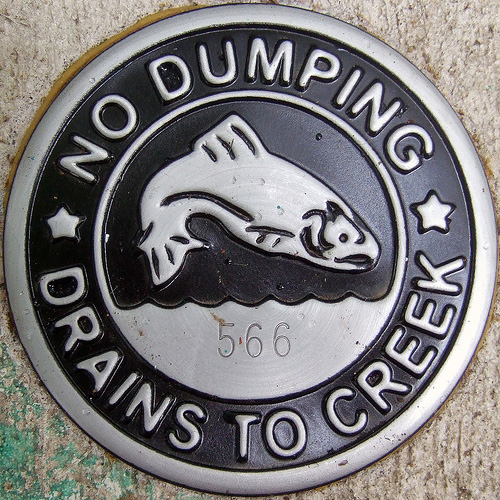
Photo: Timothy Valentine/Flickr
-
Seek Alternatives
Most hazardous products have safe, non-toxic alternatives you can use instead whether it’s an eco-friendly brand you purchase or a simple DIY recipe. Google “non-toxic alternative to _____” to begin your search. Or check out this DIY Household Cleaners book by my friends at DIY Natural.
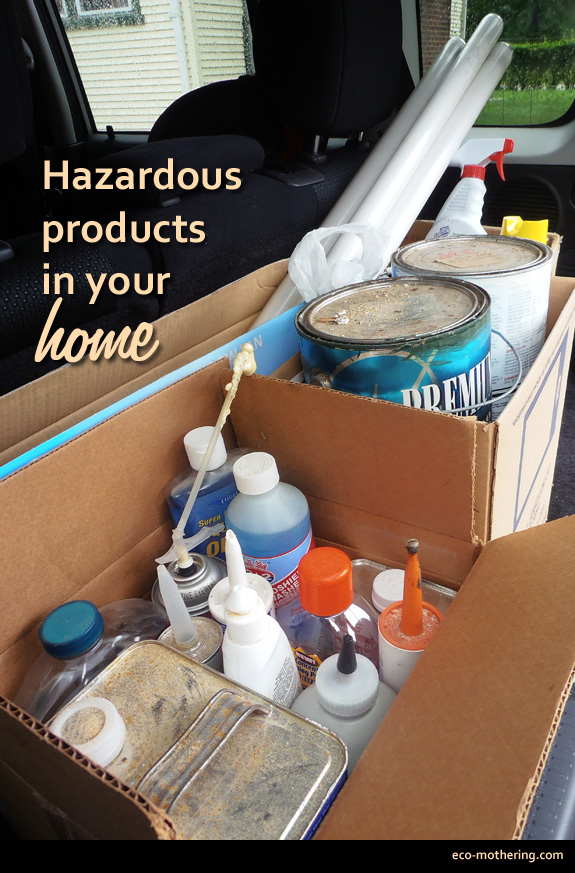
Read this (incomplete) list for an idea of what constitutes household hazardous waste. How many are in your home?
- Ammonia
- Ant and Roach Killer
- Antifreeze
- Batteries (rechargeable, button, lead)
- Bleach
- Brake Fluid
- Bug Repellent
- Car Wax
- Drain Opener
- Epoxy
- Fertilizer
- Fire Extinguishers (unused)
- Flea Collars
- Furniture Polish
- Gasoline
- Glue
- Grease and Rust Removers
- Hair Products (including hair spray, coloring kits and lice shampoo)
- Light Bulbs (CFL, fluorescent)
- Mold and Mildew Removers
- Mothballs
- Nail Polish and Remover
- Oven Cleaner
- Paint (oil based)
- Paint Thinner, Stripper and Remover
- Pepper Spray
- Photographic Chemicals
- Pool Chemicals
- Rubber Cement
- Shoe Polish
- Stain Remover
- Thermometers (with mercury)
- Toilet Bowl Cleaner
- Transmission Fluid
- Weed and Insect Killer
- Windshield Wiper Fluid
- Wood Preservatives
This post is featured on Thank Your Body Thursday, Tuned-In Tuesday and Party Wave Wednesday.