


Now that we’ve decided to have a second child, I’m already jumping ahead to explore things I might do differently. Believe it or not, one of those things is eating my own placenta.
I’d heard the controversy last spring over actress January Jones eating her placenta. While I wasn’t against the practice, I didn’t think I was crunchy enough to ever try it. Then I read an article in Kiwi magazine about a mom who used it with her third child largely to ward off post-partum depression. That got me listening.

With Sofie, the cloud of depression descended upon me almost immediately after her birth, but I was too stubborn and anxious to take any medication for it until, finally, after six months I relented to trying a small dose of Zoloft. The drug eased my mood considerably, although I worried about side effects as I continued to breastfeed. This time around, I’m nervous about spiraling into that depression again. I feel like the first six months of motherhood were a suffocating fog of tears and darkness. I certainly wouldn’t wait that long again to seek help. But I would like to seek more natural anti-depressants.
What if those natural nutrients happened to be in my very own placenta?
Although common among other animals and a part of traditional Chinese medicine, placentophagy (consumption of the placenta) is controversial in America. While research shows the placenta is packed with nutrients, there is no scientific data yet to prove that it staves off post-partum depression. What there is is lots of anecdotal evidence from moms sharing their experiences. Most raved about placentophagy and its other benefits including: quicker breast milk production, decreased bleeding and increased energy. I found one who tried it with a negative reaction.
How does one eat her placenta? Well, there are recipes for cooking it a variety of ways, but placenta pills is the only method I’m willing to try. It’s a process called placenta encapsulation, and it sounds simple enough. (Watch this video, if you dare.)
Be sure to include placenta encapsulation in your birth plan, and check that your hospital allows it – most do. Then contact a placenta service provider (many doulas also offer this service) beforehand to discuss details. You will need to keep the placenta on ice and have it encapsulated within the first 24-48 hours after delivery. I am sure my husband will be eager to know he’s on cooler duty! (For a good laugh, read this Time article by a first-time father and placenta saver.)
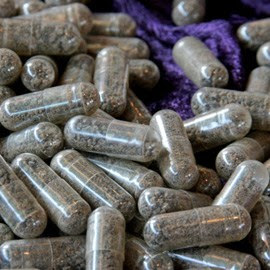
Placenta encapsulation
The placenta specialist dries the organ out, grinds it and encapsulates it into pills that are apparently as tasteless as any other vitamin. Some states insist this be done by the specialist in the mother’s home. Depending on where you live, the cost ranges from about $150-275.
The biggest concern seems to be that mothers will rely on their placenta as the sole source of healing severe post-partum depression. While placenta capsules can help, they aren’t meant to be a substitute for seeking additional resources, whether that means seeing a psychiatrist or taking anti-depressants.
For myself, cardio exercise is key. Incorporating exercise into my life when Sofie was a toddler helped me finally lose the baby weight and maintain my flow of endorphins as I weaned off the Zoloft. I’m a three-times-per-week zumba chick. I’ve learned that my body needs such high-energy exercise to release built-up toxins (physical and emotional). I would definitely include zumba as part of my postpartum plan.
I wrote this blog as a means of researching placenta encapsulation and gearing myself up for it. If I pursue this, I would probably seek out a PBi-certified specialist. Even if the effect is largely placebo-like because I think the pills work, it could keep me from turning to antidepressants. And, from an environmental perspective, you can’t get greener than eating your own placenta!
More moms’ stories on taking placenta pills:
- Momaroo
- Lindsay, blogger, Passionate Homemaking
- Laree Lindburg
This post is featured on Party Wave Wednesday.





















Very interesting and informative post. This topic is probably one that is controversial , and could be seen as gross, or even an act of cannibalism (to those who are extremely ignorant). I do not know if I could personally do that, but hey, if it’s the answer to post-par tum depression and can prevent mothers such as Andrea Yates for killing her children, then why not?! This is a method that will definitely have to be slowly accepted into society, as many are very uneducated. This could indeed be the answer to depression problems after birth, because many anti-depressants can make the behavior worse! So if it works and helps, than I am all for it!
Jesus! This is horrible, but if it’s a key to eliminate depression then I can say that this should be commercialized in the market. However, more reseach and study must be made first before we could take this into consideration.
Protazen.com
I do not claim to have an understanding of the reason why, nevertheless I personally could not hope to actually come across what I was looking for.Natural remedies to treat depression
I’m taking placenta pills now with 10 day old twins. So far, they are doing everything filly as much as advertised. I had a similar 1st post partym with my daughter that you described with your first and I was terrified of how I’d feel after twins! I wish I’d known about this with my first (also Sophie) and I’d certainu do it again after this!! But you’re right. I’m really only just barely crunchy enough for the pills - not raw, smoothies or anything!!
Wow, that’s awesome! I’m so glad the placenta pills are working for you!!
I had my third daughter (3 under three!) a couple of months ago. I encapsulated my placenta myself (after researching how) and noticed a huge difference in how I felt when I began taking them
Wow, that’s impressive. (Both encapsulating your own placenta and having 3 daughters under age 3!) Glad the pills are working for you.
I encapsulate placentas https://www.facebook.com/LivingTreePES
I have many clients when I deliver their capsules and they are sobbing holding their newborn on the couch. They take one immediately and a few hours later they text me thanking me for saving them. After a good friend of mine (whose placenta I encapsulated) reported having NO PPD when having severe PPD with her first I was a believer. I never suffered from PPD but I do have 3 small children and it sure does help me with my attitude after a sleepless night with the baby. My grandfather passed recently and it helped me get though that stressful sad time. I recommend them to every mother. Even if you dont get PPD or have milk supply issues we all have challenges in our lives where we could use a little boost.