


 After 14 years of moving from apartment to apartment—across four states—my husband and I finally bought our first house five years ago. (Yes, our house came with the black wooden whale on the chimney. It might even have been a selling point for me!)
After closing on the house, we spent a month taking down the 1960s paneling, painting the walls in low-VOC paints and having the bathroom renovated.
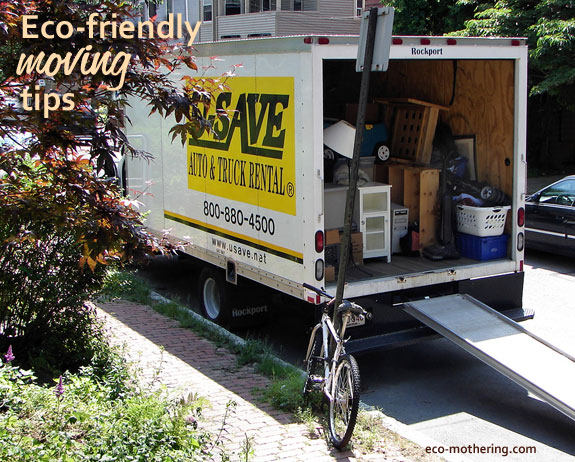
To commemorate our March move-in date, I decided to provide some eco-friendly moving tips.
-
Host a Yard Sale or Swap
Getting an early start to the moving process really cuts down on the amount of stuff thrown away last-minute in a case of “I don’t know what to do with this!” Moving will go easier and cost less if you move with less stuff. You can start with those boxes in the basement or attic that have been there since your last move. Open them up, and donate or sell the items. Host a “goodbye swap” where you pass things onto friends. Recycle items you don’t want to keep any more like outdated electronics or outgrown kids toys. Earth911 is a great resource for how and where to recycle anything.
-
Reuse Boxes
A search on craigslist always reveals people giving away cardboard boxes for free. And a search of your own neighborhood (especially college areas in late summer/early fall) often leads to abandoned moving boxes.
When my husband and I changed apartments four times in our twenties, we always found moving boxes in good, clean condition. Stores are an excellent resource. You can ask inside about any leftover boxes or, as we did, drive by the recycling bins behind the stores. We retrieved large boxes and even sturdy compartmentalized ones for storing glassware from places like Pier 1.
And when we knew we’d likely move in a year or two, we compressed the boxes flat and saved them in our basement.
Another option? Some companies now offer reusable bins made from recycled plastic: ZippGo, EZBins and Rent a Green Box, to name a few.
-
Use Greener Packing Material
You know what makes great packing material? Clothes. You’ll save on that not-so-earth-friendly bubble wrap, and you won’t be using more boxes just for packing your wardrobe. Clothing was my go-to packing material in my budget-conscious twenties. I wrapped our kitchen dishes and breakable knick-knacks inside shirts and sweaters and used old towels for protecting potentially messy items like my essential oil collection.
You can also purchase eco-friendly packing supplies, like recycled tape and biodegradable cushioning. If you do use peanuts or bubble wrap (green or not), here are some creative re-uses for them after the move.
-
Hire a Green Mover
Companies listed on Green Movers USA comply to a rating system that includes recycling cardboard, switching to renewable products (like corn-based tape), using alternative fuels and participating in a carbon offset program.
-
Green Your Driving
Choose the smallest vehicle necessary for your move. Don’t rent a 22-foot truck when a 16-foot truck will work fine if efficiently packed (how to load a moving truck) — the difference in fuel usage and carbon emissions is significant. When renting a truck, look for companies whose trucks run on biodiesel. Schedule your move during the least busy times of day so you’re not idling in rush hour traffic. Get the most out of your gallon of gasoline by following these tips for more fuel-efficient driving.
This post is featured on Healthy, Happy, Green and Natural Party Hop and Small Footprint Friday.






















Great great tips! Thanks for posting.
Wow! These are such amazing ways to reduce your footprint when you have to move! I hope lots of people apply these essential tips! Every small step helps! Thank you for sharing the valuable ideas with us on the Healthy, Happy, Green & Natural Blog Hop!
Pingback: Live it Up at the Healthy, Happy, Green & Natural Party Blog Hop #20