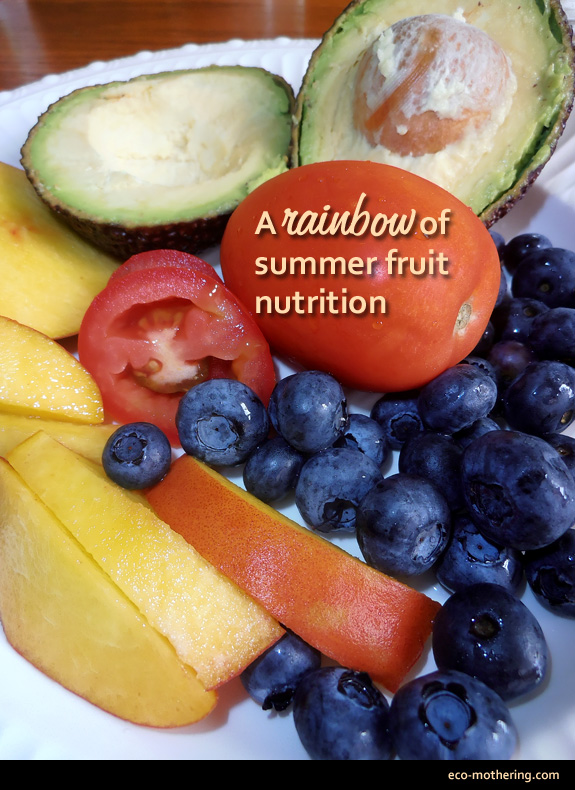
After a recent tour of our local food bank, Sofie has been focused on “eating the rainbow” at as many meals as possible. This, of course, has me gleeful that she is getting a variety of nutrients in her diet. And it inspired this post on the top 5 summer fruits for a rainbow meal…
-
Blueberries
These summer berries rank second to strawberries in U.S. consumption, but come in first among fruits and veggies for having the highest antioxidant content. Antioxidants optimize health by combating free radicals—those little buggers that attack our cellular structure. Blueberries also contain vitamin C, K, manganese and fiber. Eating raw blueberries every day protects against heart disease and diabetes, and improves eye health and brain function, including memory. Note that organic blueberries have a higher concentrations of antioxidants. And freezing blueberries does not affect their nutritional value, so stock up in summer and enjoy them all year long!
Recipe Inspiration: Blend blueberries with yogurt and honey. Freeze to make a delicious and healthy popsicle.
-
Tomatoes
Yes, they are a fruit, even though my daughter counts them as one of the veggies she’s willing to eat. Tomatoes are loaded with lycopene, a red-pigmented carotenoid that’s known for warding off heart disease and certain cancers. They’re also a good source of vitamins A, C, K, folate and potassium. Although kids often prefer them raw, cooking tomatoes releases the lycopene into a form easier absorbed by our bodies. With so many tomato varieties available from seed or farmers markets, your kids can pick the kind that interests them.
Recipe Inspiration: Tomato Bruschetta: tomato, basil and mozzarella cheese on a toasted baguette. Yum!
-
Avocado
Full of healthy, monounsaturated fats (The American Heart Association recommends that 25-35% of kids’ calories come from these good fats.), this yellow-green fruit is also rich in vitamins B, C and K and has a high fiber content. The healthy fat in avocadoes can lower heart disease and reduce inflammation. To get the most nutrients from an avocado, peel it like you would a banana. It’s the dark green flesh that has the most carotenoid antioxidants.
Recipe Inspiration: Enjoy a BALT sandwich (or ALT if you’re vegetarian): slices of bacon, avocado, lettuce and tomato on bread. Kids might prefer it mixed with lemon juice as a sandwich spread, in lieu of mayo or mustard.
-
Kiwifruit
Another high-fiber fruit, kiwifruit provides vitamins C and E, plus folic acid, magnesium and potassium. Some researchers call the kiwi the most nutrient dense fruit, ounce for ounce. (It contains more vitamin C than an orange.) Its phytonutrients repair DNA and protect against some cancers. Studies on its antioxidant properties have shown that kids consuming these and other citrus fruits suffer less from respiratory problems like asthma and chronic coughs.
Recipe Inspiration: Dice kiwi and cilantro into yogurt with spices to make Kiwi Raita, an Indian-style condiment or dip. Cater the amount of spice to your little ones’ palates.
-
Peaches
High in vitamins C, A, E, potassium and dietary fiber, these fruits fill you up. They are also rich in carotenoids, which enhance your immune system and protect against DNA damage and some cancers. A large peach constitutes one cup of your recommended daily fruit and vegetable serving. Plus they’re just full of sweet, juicy goodness.
Recipe Inspiration: Grilled peaches with goat cheese (or cottage cheese) and honey, which makes a perfect pairing of protein and fiber.