Nature Photos from my Alaskan Adventure

Mendenhall Glacier, Alaska | Eco-Mothering.com

My family just returned from an Alaskan cruise, and I wanted to post some of the beautiful nature and wildlife photos we took while there. Although a cruise is certainly not an eco-friendly travel option, the trip was wonderful, made even more so by the friends we vacationed with. One of our favorite excursions was whale watching, where we saw about eight humpback whales in Auke Bay, Juneau. We were close enough to hear them breathing. I managed to capture several of their tail fins after diving under as well as a calf who showed more of himself while playing with a sea lion.             We had anticipated seeing lots of glacial action, however, due to a medical crisis with one of the ship’s guests, the Tracy Arm Fjord part of our trip was cancelled. Still, we managed to see Mendenhall Glacier in Juneau. Did you know … Continue reading
Guilt-Free Green Tip #8: Pick Up Your Dog Poop

Reasons for Picking Up Your Dog Poop | Eco-Mothering.com

After working eight years for my local environmental organization, Save The Bay, I learned quite a bit about marine pollution and its causes. And while some causes (like stormwater runoff) are out of our hands, there are others completely in our control. One of those is picking up dog poop. In 1991, the EPA labeled dog waste as a non-point source of pollution (alongside insecticides, oil, grease and acid drainage). Which means it’s a serious thing. Poop contaminates the ground around it and can also get washed into local storm drains and waterways when it rains. Benefits of Picking Up Dog Poop Healthier Pups and People Diseases such as E. Coli, roundworms, giardia and salmonella can be transmitted through dog feces to other dogs, cats or even people. (According to Stephan Budiansky in his book, “The Truth About Dogs,” there are 65 diseases that dogs can transmit to humans — … Continue reading

Top 5 Tips for Nurturing Wildlife in Winter

Nurturing Wildlife in Winter | Eco-Mothering.com

We may stay nice and cozy in our heated houses stocked with store-bought food, but our furry friends have a harder time finding food and shelter in winter. Here are a few simple things you can do to help them out. Provide Food Plant native trees and bushes in your yard that offer their own fruits (berries, seeds, acorns). Leave your Jack-o-Lantern out after Halloween, as we do, and watch squirrels dig into it. Offer feed such as black-oil sunflower seed, cardinal mixes or peanuts that appeals to a wide variety of winter birds. Stop the Yard Work Don’t trim your dead plants and flowers until spring because many animals use the branches, twigs and seedheads for food or protection in winter. Leave flowerpots turned upside down to provide a safe spot for toads and newts. Some plants that wildlife are particularly fond of include: sedums, black-eyed Susans, sunflowers, zinnias, … Continue reading

Top 5 Things You Didn’t Know About the Yellow-tailed Woolly Monkey

About the Yellow-Tailed Woolly Monkey | Eco-Mothering.com

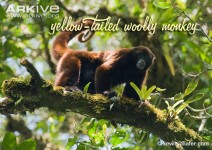
The yellow-tailed woolly monkey was once considered extinct. The species was first discovered in northern Peru in 1820; however, between 1926 and 1973, not a single yellow-tailed woolly monkey was sighted, causing scientists to deem the animal extinct. Then in 1974 primatologist Russ Mittermeier rediscovered small groups of the monkey in the highlands of Peru. Still, the yellow-tailed woolly monkey is still considered one of the rarest mammals in the world. (Eco-Mothering was able to adopt one! See the video at the end of this post.) They are named for a distinct yellow stripe of fur. It runs along the underside of their tails and is what separates them from other species of woolly monkeys. Their fully prehensile tail is used as a fifth limb for climbing, eating and leaping (up to distances of 15 meters). They are a male-dominated society. They usually live in groups of 4 to 30 … Continue reading
Save The Rainforest with This Reusable Water Bottle

rainforest

SIGG and Cuipo (a social enterprise named for an endangered, towering tree) have gotten together to promote rainforest conservation. They recently debuted three new children’s water bottle designs: Tiko the toucan, Peaches the pink dolphin and Cezar the Emperor Tamarin monkey. With each purchase you can save one square meter of Central American rainforest. The SIGG bottles are typically Swiss—designed to be stylish, clean and functional—and made from 100% recyclable aluminum. The liners are BPA- and phthalate-free and have no VOCs (volatile organic compounds). My daughter likes her pink dolphin and doesn’t complain about a metallic taste in her beverage. The cool part is activating your special code to save a section of rainforest. Sign in and redeem your code online with Cuipo. You’re automatically taken to a map that shows the section (latitude and longitude) of rainforest designated in your (or your child’s) name. This makes a pretty cool geography lesson, … Continue reading

Giving Back: How My Daughter is Saving the Chimps One Friend at a Time

Kids Giving Back | Eco-Mothering.com

My six-year-old made her first charitable donation this year. She decided to save the endangered chimpanzees. She’s an animal lover so the organization did not surprise me. The giving did. I donate regularly to wildlife organizations. She sees the catalogs, the free gifts. One day an appeal from Save The Chimps arrived in the mail. I did not know them, but asked Sofie—who had recently shown an interest in chimps and monkeys—if she wanted to donate. She immediately said yes. I explained this meant giving some of her money. (I offered to split the $25 donation with her.) We also discussed why the chimps needed saving. She wanted in. She opened up her piggy bank. I wrote the check. I thought that was the end of it. A month later, the mother of one of Sofie’s school friends thanked me for my daughter’s activism. “Huh?” I said. “Yes,” she said … Continue reading