


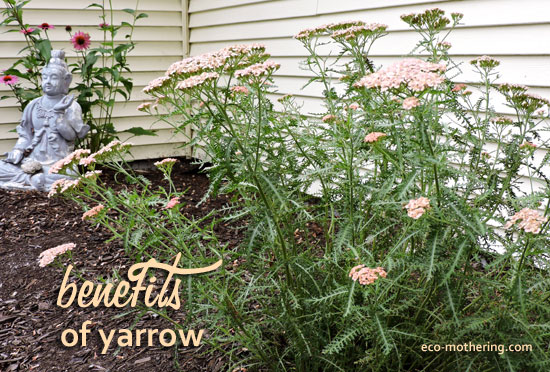
We added a few new plants to our Zen garden this year; one of them my daughter picked out was the yarrow plant or Achillea millefolium. She liked its feathery green leaves, and it has since grown rather quickly (probably because yarrow is often found growing wild in North America) and bloomed pretty pink-orange flowers that she can see from her bedroom window.
It wasn’t until I looked the plant up online that I discovered what a highly beneficial plant Sofie chose.
Staunching Wounds
Sometimes known as “nosebleed,” the yarrow plant has a long history in wound treatment. Sources vary on whether the Greeks, the Romans or the Neanderthals used it first; however, yarrow was often employed by soldiers in battle to staunch bleeding. I was intrigued by this. A few weeks ago, when I cut myself with a paring knife (a small cut), it stopped bleeding almost instantly once I held a yarrow leaf to the wound.
Sofie tested this theory during one of her frequent nosebleeds. Holding a tissue to her nose, she dashed outside and disappeared into the Zen garden. My daughter returned a minute later with no more bleeding. She had torn off a few yarrow leaves, put them inside her tissue and held it up to her nose. Done.
I have since read that yarrow can act as both a blood stopper as well as a starter. If you roll the leaf and put it inside the nostril, it may cause bleeding whereas pressing it against the nose stopped the flow.
In tea or tincture form, yarrow can be used for internal bleeding (ulcers, heavy menstruation) or used as a compress for bleeding hemorrhoids.
Relieving Pain
Chewing on yarrow leaves can relieve toothaches; Native Americans often did this. Drinking a yarrow infusion can aid urinary tract infections. Added to a sitz bath, yarrow can relieve hemorrhoids and menstrual cramps. *Note: Because yarrow affects the menstrual cycle, women who are pregnant should not take it in case it leads to miscarriage.
Breaking Fevers
Because yarrow is good at making you sweat, it is often used in colds and fevers. You might have your child drink a hot yarrow tea or add one to his bath to break a fever. Yarrow capsules can also be used with fevers or to shorten the duration of a cold. The herb improves blood circulation and relaxes the pores, which enables sweating and combats the infection.
Food and Drink
Young yarrow leaves can be eaten raw in a salad, cooked in soups and stews or fried. The flowers and leaves can be made into a tea. (Milfoil tea is often used in the Scottish Highlands for alleviating melancholy.) The leaves are sometimes used instead of hops to brew beer, which is thought to be more intoxicating.
So, unintentionally we are growing our first medicinal plant, and I’m excited about exploring some of its healing properties.
Don’t have yarrow in you yard? No worries. Yarrow is also available as a dried herb, capsule, tincture or liquid extract. (Shop Vitacost here and receive $10 off if you’re a first-time user. I’ll receive $10 too, so thank you for supporting this blog!) As this powerful herb does interact with certain medicines, you should always consult your health care provider before using it.
This post is shared at Natural Living Monday and Simply Natural Saturday.























Just found your blog through Top Mommy Blogs. I’m thrilled! As a Pagan mom trying to get her big family as green as possible (Environmentalism is literally part of our religion), I’m enjoying the tips, tricks, and advice here. Thanks!
Glad you found us!
I planted two Yarrow plants last year and have started to learn that there are so many uses for it…what a great addition to my herb garden!