Getting a Christmas tree has been a DeForbes family tradition since before we thought of the name DeForbes (that’s a story for another time).
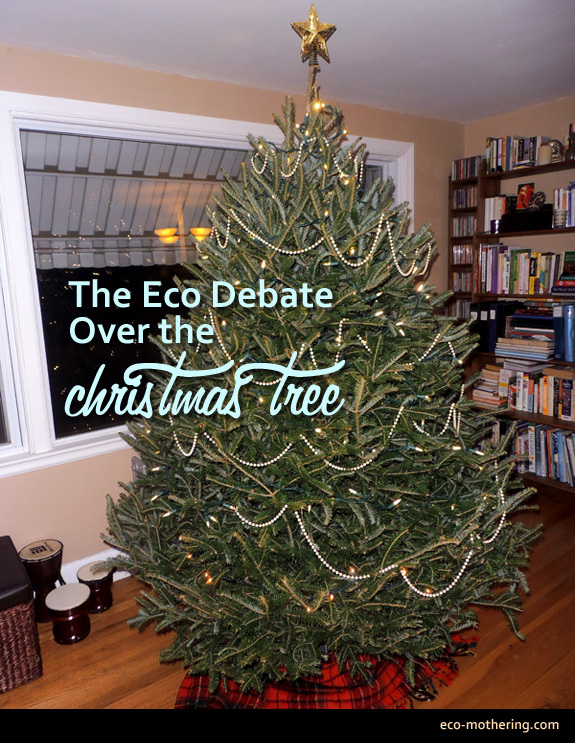
The tree is the cornerstone of our holidays. We get it early and keep it up into the new year. We rearrange our furniture to give it ideal bay window placement. Our December electric bills rise due to nightly lightings. All this for the joy of bringing a bit of the outdoors inside.
To give you a little background, I grew up with artificial trees and pine-scented aerosol, counting the Christmases until I could lug a fresh evergreen into my own home. I don’t care that the sap ruins my clothes as I string the lights or that, after a few weeks, my hardwood floor looks like a forest of pine needles. To me, only real trees have that holiday magic.
Once I considered myself an environmentalist, I worried: “Do I have to give up my Christmas tree?” I had visions of old growth forests being cleared for my decorating pleasure. Would I have to surrender to artificial greenery again?
Apparently not.
This 2010 New York Times article references a Canadian environmental consulting firm’s definitive study, Comparative Life Cycle Assessment of Artificial vs. Natural Christmas Tree, which concluded that a live tree is the greener option. An artificial tree would have to be used for 20 years in order to be more eco-friendly than buying a fresh-cut tree annually. (Most of the fake tree users I know replace them about every five years with newer versions.)
The bigger concern is that artificial trees can be toxic. They’re typically made with PVC, or Polyvinyl Chloride, one of the most environmentally damaging forms of petroleum-derived plastic and, in addition, may shed lead-laced dust all over your children’s gifts. Fake trees are not recyclable or biodegradeable, and, with most being made in Asia these days, transporting the trees cleaves an even bigger eco-footprint.
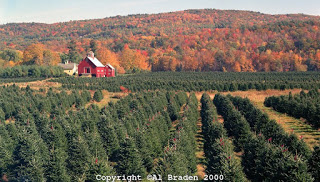
Tree farm near Ascutny, Vermont. Photo by Al Braden.
Some artificial tree enthusiasts argue that growing live trees requires pesticides, which pollute your health as well as the health of the environment. While true (organic trees comprise only 1% of Christmas trees grown in the U.S.), the presence of a Christmas tree farm also offers many benefits: preserved green space, animal habitat, soil stability and increased oxygen in our atmosphere.
Live trees are veritably waste-free, as they can be recycled after use. Many cities collect the trees curbside and turn them into mulch or compost. (Check out this state-by-state guide on recycling your Christmas tree.) Tree farmers replant once a season’s trees have been cut down. Fake trees end up rotting in landfills.
While the ideal third option is to buy a living Christmas tree that can be replanted after the holidays, in the live vs. fake debate, live trees win.
Whew! Lucky for me and my holiday traditions.
PAID ENDORSEMENT DISCLOSURE: In order for me to support my blogging activities, I may receive monetary compensation or other types of remuneration for my endorsement, recommendation, testimonial and/or link to any products or services from this blog.