


We just got back from our first camping trip in three years – Sofie’s first. I’d forgotten just how grimy three shower-less days can feel, although Sofie seemed to have no problem with that part. All in all, she was quite the trooper, adapting quickly to tent life in the dirt and drizzle. (The bugs she could do without.)
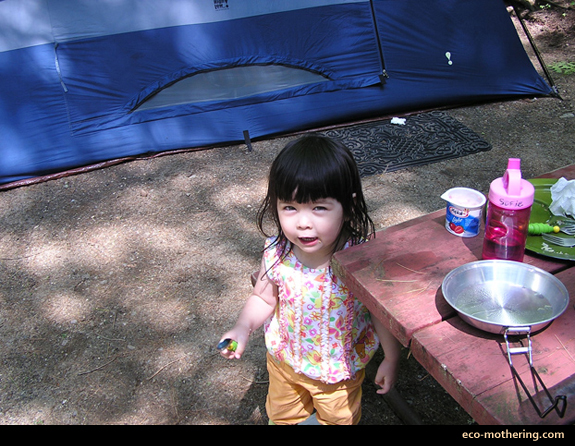
My husband and I invested in camping gear when we first moved to Rhode Island, figuring it was the cheapest way to see New England. Now, as parents, we realize that it is also a fairly green way to travel and share our love of nature with our daughter. While we did not give much thought when purchasing our gear six years ago, I am now analyzing it with an eye to sustainability.
Here are some ideas for camping green:
- Pitch a tent. RVs and trailers consume a huge amount of energy and fuel. A tent is lightweight, easy to pack and there’s nothing quite as peaceful as sleeping in one while the rain lightly falls. If you must do the RV, you can at least offset some carbon emissions with a Terra Pass. In my 20s, I could just lie in my sleeping bag on the ground, not minding the various tree roots pressing into my back. These days, an airbed is a must and, together with the sleeping bag, provides enough comfort. Now you can buy recycled sleeping bags and there’s even an award-winning, carbon-neutral eco thermal pad on the market.
- Use reusable cooking equipment, dishes and utensils that can be washed on site. Avoid paper products - even your napkins can be cloth. Buy foods in bulk before the trip instead of those individually wrapped specialty products that use way more packaging than necessary (and bring containers for storing leftovers). The campfire is still the most ecologically friendly way to cook, although I don’t see us disposing of our propane-fueled stove anytime soon.
- Use biodegradable soaps. Now this is something I had not thought about when I brought along our ordinary dish detergent. Maine had strict regulations on the disposal of gray water so that it wouldn’t end up contaminating nearby waterways, but even biodegradable soaps can eventually pollute and need to be used sparingly.
- Conserve energy with LED flashlights and lanterns, a much more energy-efficient alternative. And leave the tech stuff (laptops, radios, portable TVs, etc.) at home. It will all still be there when you return.
- About those bugs… I’ve been using Burt’s Bees bug repellent on Sofie with success. She ended up with fewer bites than either Mike or I who, fearing the efficacy of Burt, each used the DEET stuff. Repel Lemon Eucalyptus also comes highly recommended. Natural remedies include essential oils of lavender, peppermint, bergamot and cedarwood. After the bite, you can try calamine lotion, toothpaste (the white kind), tea tree or lavender oil.
Above all, respect nature. Ostensibly, your love of nature is the reason you’re camping to begin with. Some of the best moments this weekend were watching Sofie run along the waves at the beach, hearing her squeal with delight as a chipmunk ran over her foot and inhaling the outdoorsy and slightly smoky scent of her.
10 More Ways to Camp Ecologically
Camping Green with your Dog























Very nice! dbddkfaceb