


Lately, Sofie’s been asking about the homeless guy she sees at a particular intersection we pass. She wants to give him food. This led to discussions about food pantries where people can go to get food. And then we asked our friend Erica, who works at our local food bank, to give us a tour.
The RI Community Food Bank is a distribution warehouse that solicits, stores and provides surplus food to 178 member agencies at 238 sites across the state. (Find your nearest RI Food Bank agency here.) They have some pretty cool programs like Neighborhood Pantry Express, a mobile food pantry that provides fresh produce to low-income people, and Community Kitchen, a 14-week culinary job-training program for jobless adults that also provides healthy dinners to hungry kids.
The warehouse alone occupies 35,000 square feet and can hold two million pounds of food at one time! Here’s a peek at our tour:
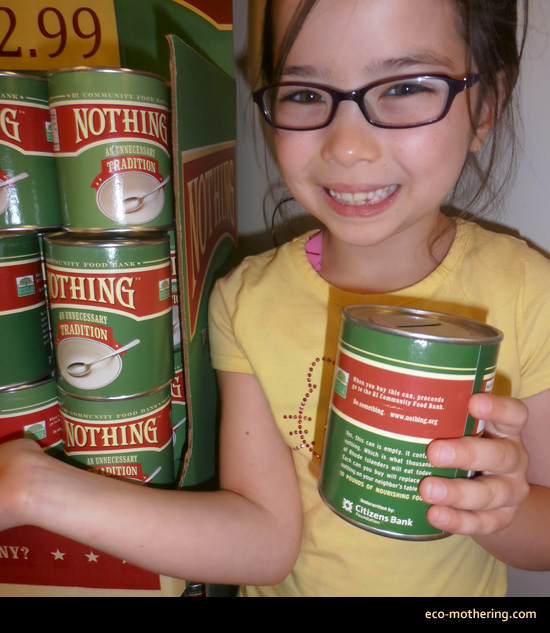
Do Something About Nothing. An award-winning campaign, this empty can of “Nothing” symbolizes what all too many people find in their kitchens each day. Local retailers sell cans to raise money for the Food Bank. Schools use the cans to collect coins to replace “Nothing” with something—a pretty effective marketing campaign, I thought.
The Food Bank is funded primarily by gifts from individuals, corporate donations and foundation grants. Government funding accounts for just 6% of the operating budget. The RI Food Bank serves 66,000 hungry people each month in ours, the smallest state. Wow.
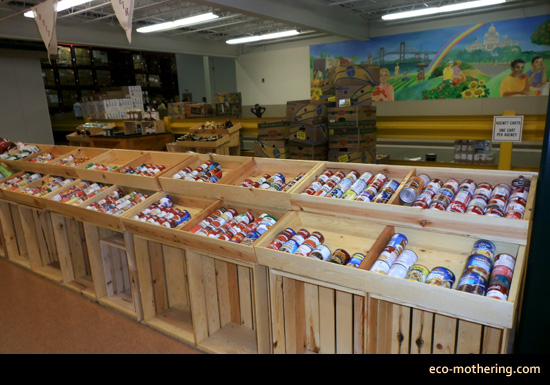
An area of the Food Bank is set up like a shopping market (and in fact the building used to be a grocery store) for member programs to come in and stock up on the items they need. Part of the food is purchased by the Food Bank, part is donations from food drives and grocery store leftovers that get checked for safety by volunteers. They even have “pig barrels” for unusable dry goods (like pasta) that go to local farmers to be turned into pig feed. No waste here!
Sofie seemed surprised to learn that not every kid has constant access to food like she does. She was intrigued by the takeaway story booklet that showed a “food insecure” family visiting a food pantry. And now she’s determined to return with our own box of food donations.
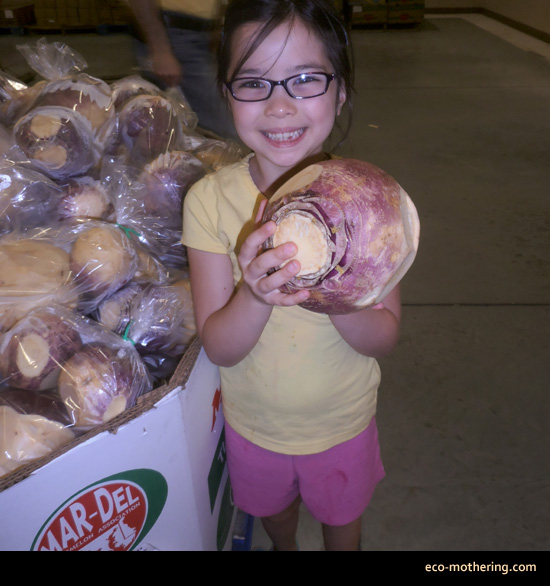
Sofie had fun with the rutabagas. Local Rhode Island farms provide excess crops to the Food Bank, and rutabagas is what they received a surplus of this week. I don’t believe I’ve ever eaten a rutabaga, but they are a good source of fiber, potassium and vitamin C. Erica said she’d be searching for tasty, low-cost rutabaga recipes for the culinary students to use and to share with member agencies.
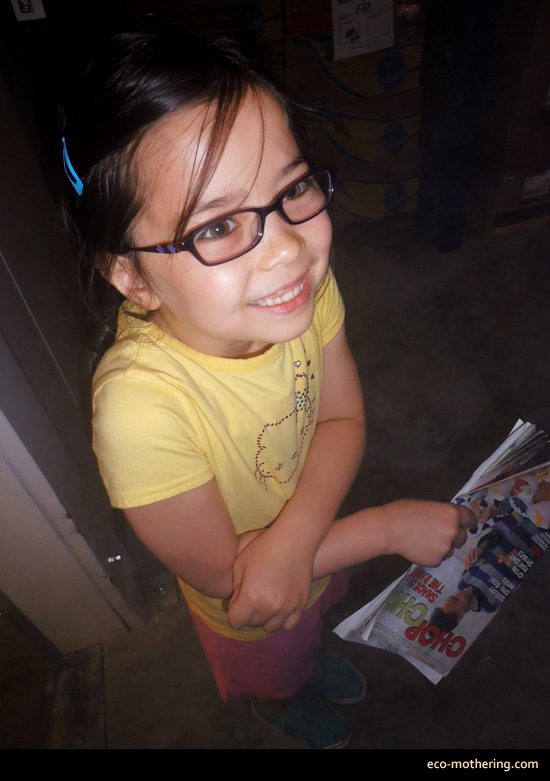
This is Sofie in the giant freezer. I was surprised to learn the Food Bank accepts meats and frozen foods (but only from food growers or distributors).
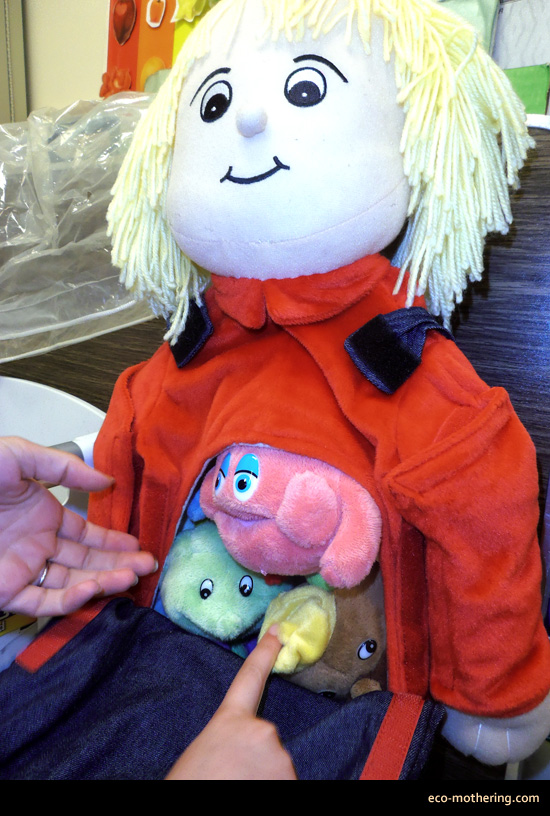
This large-scale doll, Spencer, is used to educate kids about how what we eat affects our bodies. Spencer has removable plush organs with names like The Kidney Brothers, Luigi Liver and Sir Rebrum. Of course this was Sofie’s favorite part. I had to tear her away from playing…
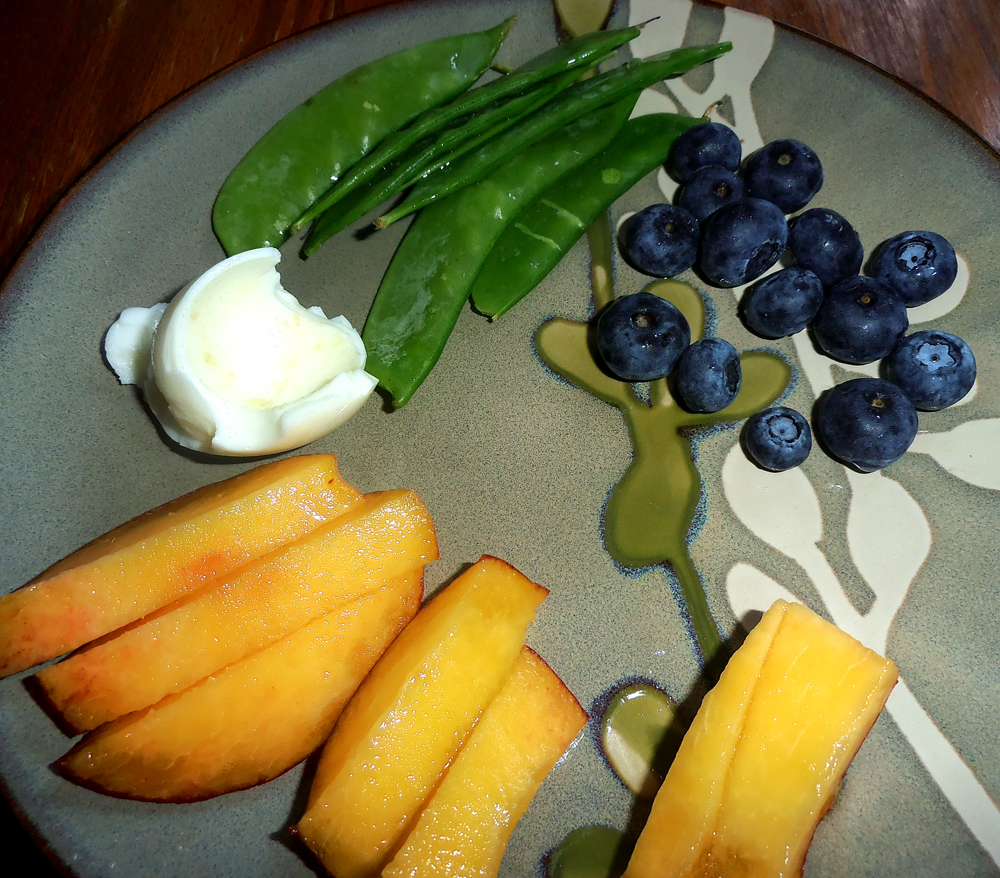
Sofie’s requested breakfast one day after our Food Bank tour.
The tour ended up being a nutritional teaching tool as well. Sofie was introduced to the USDA MyPlate and the notion of “eating a rainbow” of foods for a variety of nutrients. Since then, she’s been obsessing over eating the rainbow on her plate. In the past week, she has asked me for lettuce and pea pods for breakfast! I don’t know how long this will last, but I’m going to enjoy it while I can. It’s upped my own diet as well, being reminded that half my plate is usually filed with pasta or meat instead of colorful fruits and veggies.
Our food bank tour was perfect for exposing my curious six-year-old to elements of social action and nutrition, and Sofie left with a zeal for her new knowledge Check out the food bank in your area.
















One Response to What We Learned from a Tour of Our Local Food Bank