


Regifting is a touchy subject. Even though about 50% of adults consider it acceptable, the practice is often shrouded in shame and secrecy. The belief is that a gift should be bought brand new — but why? What is this cultural obsession with newness?
Newer doesn’t make us happier. According to the Story of Stuff, our national happiness peaked sometime in the 1950s, even though we consume twice as much as we did back then. Yet we continue to buy new stuff for ourselves and for others, especially around the holidays.
The Truth About Buying New
- It uses up our planet’s natural resources. (One-third of our resources have been consumed in the past 30 years.)*
- It adds to landfills. (Every person in the United States makes 4.5 pounds of garbage per day.)*
- Typically, newer products are not made as well and don’t last as long.
- It costs more money.
- The newer the item, the more off-gassing of toxins. (More than 100,000 synthetic chemicals are found in commerce, most of which have not been tested for health effects.)*
Now don’t these facts make “new” seem a little less appealing?
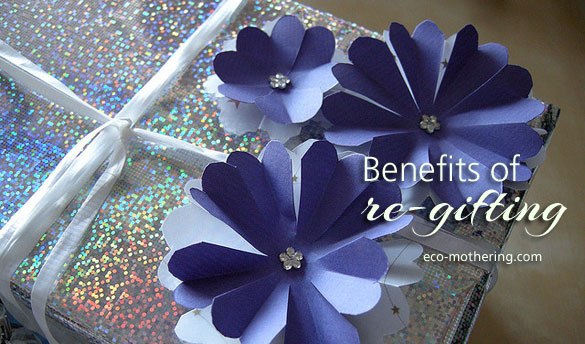
Photo: PermaCultured/Flickr
What Exactly is Re-gifting?
While the practice goes farther back, the term “re-gifting” was popularized in the 1990s by the TV show Seinfeld. And the classic example is the fruitcake passed along multiple times — although I hear that champagne is the new fruitcake.
When it comes to re-gifting, there are two categories: (1) Passing on a new item you received but do not want; and (2) Giving something you have used or bought secondhand. This second option is typically frowned upon in etiquette circles, but I think it has a definite place in our resource-depleted world.
In either scenario, the key to re-gifting is that it’s meaningful and appropriate. A re-gift is appropriate when it’s something the recipient would absolutely adore. It is not a way to simply pass on the ugly sweater you got from Aunt Lulu.
For example, my toddler daughter Sofie received an abundance of Christmas toys from our extended family. There were so many gifts, I put some aside right after Sofie opened them; she didn’t notice and never missed them. The toys made great birthday gifts for her friends. The kids who received them were happy, and we carved out a little more space in our home. What could be wrong with that?
Benefits of Re-Gifting
- It saves you money and time. (Americans spend 3-4 times as many hours shopping than Europeans do.)*
- It declutters your home.
- It allows for gifting of unique gifts or items you could not afford brand new.
- It’s a sustainable choice that gives items a longer life and protects our planet’s limited resources.
One year, I picked up a Coach handbag at a women’s clothing swap I participate in with several friends. My sister is addicted to Coach handbags, so I gave it to her for her birthday. It obviously wasn’t new (no tag), however, it looked new, so I considered it a fine gift. Still, there was some conditioned shame muddled in there. Probably because my family is very into buying new, which made me feel my gift was lesser than.
The shame of re-gifting is lifted when you know the recipient is open to such practices.
My mother-in-law, for instance, is a proponent of reusing and re-gifting. I came across a book at a local secondhand store, one I knew would fill her 20-hour plane ride to the Philippines with much laughter. As a used book, it showed signs of wear. However, I knew my mother-in-law would not mind. We wrapped it up as a secondary gift for Christmas, and she loved it.
Here’s what I wish: That more people imbued their gifts with meaning, instead of buying something just for the hell of it. That we become less a society of consumers and more a society of thoughtful givers. That all gifts, both new and secondhand, would be received with joy. That re-gifting loses its tinge of shame and becomes an appreciated sustainable practice.
Where do we start? How about by celebrating National Re-gifting Day, which is observed on the Thursday before Christmas. Then check out the site Regiftable.com where you can read stories about re-gifting, from the hilarious to the inspirational.
Then, make your list of holiday gift recipients and consider what item would make each person this happy.
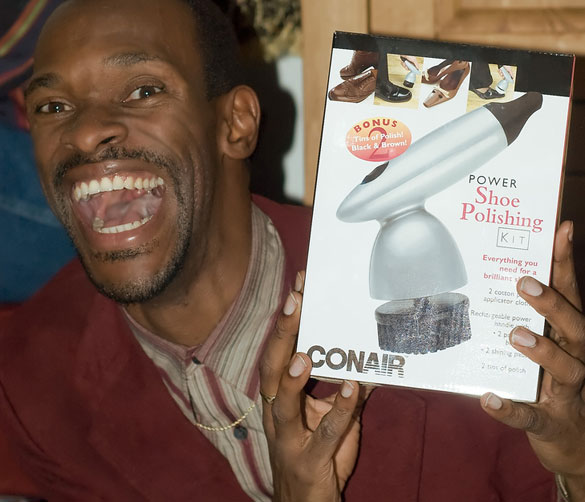
This man is thrilled with his regift! Photo: David Goehring/Flickr
*Data from the StoryofStuff.org
This post is shared at Natural Family Friday.



















I think the key to regifting is to put a good deal of thought into your selection. A thoughtful gift is a good one, whether it’s new or not. Thanks for posting. Hello from Natural Family Friday.