Save The Rainforest with This Reusable Water Bottle

SIGG and Cuipo (a social enterprise named for an endangered, towering tree) have gotten together to promote rainforest conservation. They recently debuted three new children’s water bottle designs: Tiko the toucan, Peaches the pink dolphin and Cezar the Emperor Tamarin monkey. With each purchase you can save one square meter of Central American rainforest.

rainforest

Photo courtesy of panamaturismo.com

The SIGG bottles are typically Swiss—designed to be stylish, clean and functional—and made from 100% recyclable aluminum. The liners are BPA- and phthalate-free and have no VOCs (volatile organic compounds). My daughter likes her pink dolphin and doesn’t complain about a metallic taste in her beverage.

The cool part is activating your special code to save a section of rainforest. Sign in and redeem your code online with Cuipo. You’re automatically taken to a map that shows the section (latitude and longitude) of rainforest designated in your (or your child’s) name.

This makes a pretty cool geography lesson, too. Sofie’s square meter is on the gulf side of Panama, on the southern end of the Chepo district. She’s already imagined a family of howler monkeys living in her section of forest.

Cuipo acquired 3,300 acres of rainforest in Panama that is protected under their non-profit foundation, One Meter at a Time. The organization employs local and indigenous people and teaches them skills in preservation. A purchase of a Cuipo product (they also sell T-shirts) becomes a donation to One Meter at a Time.

View a helicopter tour of the rainforest preserve. It’s awesome to see so much greenery still intact.

cuipo-water-bottles

SIGG water bottles: BPA and phthalate-free

The kids’ bottles come in two sizes (Peaches and Cezar are .4L and Tiko is .3L) with a few facts about each rainforest animal.

Perfect for the upcoming summer months, these water bottles make a thoughtful eco gift. Find them at SIGG online or at Whole Foods for $18.99 - $20.99.


Disclosure: Thanks to SIGG for sending a Cuipo water bottle to preview. As always, all thoughts and opinions are my own.


How to Make Your Lawn Greener and Safer

I blame 1950s suburbia for getting America excited about plush green lawns. Sure, they accent the white picket fence nicely, but plush green lawns require a lot of work, money and, most of all, harmful chemicals that end up seeping into our water.

According to Sierra Club, lawns cover about 40,000 square miles of the U.S. and are maintained with nearly 100 million pounds of pesticides annually. And where do all those lawn fertilizers and pesticides end up? They leach into our groundwater. They get washed into local rivers, streams and lakes when its rains. Why? Because in your local watershed, everything flows downhill. Even if you don’t live right by the water, pollutants on land eventually end up there where they can kill fish and lead to polluted waters unsafe for human contact. (Want the technical details on human exposure to pesticides? Read this.)

This doesn’t mean you have to settle for a brown lawn every summer, but there are steps you can take to be truly green while greening your lawn.

Planting

First, consider downsizing your lawn. The more you have, the more time and money you’ll spend maintaining it. Replace grass with flower and vegetable beds, trees or native plants. In areas where grass does not grow well due to shade, poor soil or whatever, go with the flow of nature. Turn that area into a play area, rain garden (learn how to make a rain garden) or compost pile.

Test your soil yourself or through your local cooperative extension office. If you have crappy soil to begin with, you’ll only spend more money on chemicals that will only mask the problem.

When seeding, choose drought and disease-tolerant species like fescues or zoysia. Native grasses and ground cover already grow well in your area, thus requiring less attention. Ask your local nursery for guidance in choosing native species. Minimize grass species (such as the common Kentucky bluegrass) that require regular watering and fertilizer.

Part of our south-facing front yard was nothing but a display of weeds and roots from our neighbor’s maple tree. Rather than fight to create a lawn where none will grow, we decided to make a rock garden. A few weeks ago, our arborist friend Dave (from Out in Front Horticulture) regraded the area and replaced the weeds with stones and beds built up to accommodate shallow-rooted, sun-loving plants that we purchased from a local nursery. With the reclaimed fire pit and tea lantern, we have transformed our formerly disaster of a yard to a Zen garden that requires little to no maintenance.

Zen rock garden in front yard

Instead of forcing grass to grow here, we transformed the front yard into a rock garden.

Feeding

Besides contaminating groundwater, excess fertilizer contributes to thatch build-up in your lawn and undermine a grass species’ natural resistance to disease. Skip the fertilizer, but if you can’t go cold turkey, use a slow-release, organic fertilizer once in the fall and once in spring. Organic fertilizers are derived from natural sources like compost. They increase soil moisture retention and release nutrients more slowly so that there is less leaching into groundwater.

Even if you don’t care about polluting the water, you probably care about polluting your children. Beyond Pesticides offers a wealth of information on hazardous lawn chemicals and organic alternatives. You can even make your own, safer homemade pesticides.

Mowing

Switch to a Charlie Brown mower. You know what I mean—that push mower that whirs along peacefully and provides you with a workout so you can skip the gym later. Otherwise, opt for a cleaner, quieter and more efficient electric mower over a gas-powered one.

Don’t give your lawn a crew cut. Setting the blade at 3 inches provides several benefits:

  • Grass at this height keeps the soil from drying out. It needs less water, which means less work and more savings for you.
  • Taller grass prevents many sun-loving weeds from sprouting up.
  • Taller grass is more drought-tolerant and disease-resistant.

When you do mow, forgo the bag. Instead, let the clippings fall into the grass where they act as natural fertilizer. Clippings reduce evaporation and provide up to 30% of your lawn’s nutrients. Easy, peasy!


Watering

First, you should know that it’s perfectly normal for lawns to turn brown in summer. They’re dormant, not dead, and they tend to green up again when it rains. So don’t go crazy trying to make a brown lawn green during a heat wave. Save the water for something more useful like bathing.

If you do water your lawn, water in the early morning to reduce evaporation. Morning waterings also reduce root rot and mildew. Water deeper and less often; you only need to water once a week with one inch of water. Use a rain gauge to measure. Sprinklers set to turn on every day actually weaken the grass by encouraging shorter roots. Let your lawn dry out in between waterings.

Use soaker hoses for gardens to get water right at the roots where it’s needed most. Set up rain barrels (where to buy rain barrels) connected to soaker hoses so that the water for your lawn is recycled and free.

In the end, your lawn should be about enjoyment and ease rather than keeping up with the Joneses (who are only keeping up with the Smiths who are trying to keep up with the Browns…). Your kids and your planet will thank you for a safer, chemical free lawn.

More Resources

  • Natural Lawn Care
  • Bay-Friendly Backyards (geared for Rhode Islanders, designed by me)

This post is featured on Small Footprint Friday and Thank Your Body Thursday.

My Blog is Carbon Neutral!

I love this idea that I stumbled upon from Green Momma. An initiative started in Germany several years ago, Mach’s Grün (Make It Green) has a goal of reducing carbon dioxide emissions. How? By planting a tree for every blog.

With upwards of 181 million blogs globally, that’s a lot of trees!

Dr. Alexander Wissner-Gross, Harvard physicist and environmental activist, deduced that an average blog of 15,000 monthly page views emits 3.6 kg of carbon annually (based upon the energy consumption of computers). A single tree is estimated to absorb anywhere from 10-30 kg of carbon per year. Who knew there were even people researching this kind of thing?

Mach’s Grün partnered with the Arbor Day Foundation to reforest 65,000 acres of California’s Plumas National Forest, which was decimated by fire. Their latest project is restoring the Shasta-Trinity National Forest with 640,000 new trees.

carbon-neutral-white-125x125Kind of cool to know that a tree in Shasta-Trinity Forest represents Eco-Mothering. And I get to sport this nifty badge in my sidebar.

Are you a blogger? Here’s how you can participate in making your blog carbon neutral.


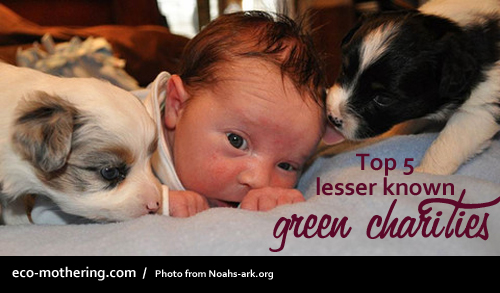
Top 5 Lesser Known Green Charities

Some people don’t get around to making charitable donations until the end of the year when they’re in the spirit of holiday giving. Others think of it as a write-off during tax season.

Whenever you do it, charitable giving is a wonderful habit to adopt. So here are my top 5 organizations that focus on environmental or sustainable work. There are many great charities out there, but I opted for mentioning some of the lesser known ones who could also use some financial support.

  1. Safer Chemicals, Healthy Families This coalition of organizations and individuals works to inform and protect families from toxic chemicals. They’re working with legislators to pass the Safe Chemicals Act and create smarter limits on the things that go into the everyday products we use. DONATE.
  2. Earth Day Network Developed out of Earth Day, the EDN works with 192 countries to “broaden, diversify and mobilize the environmental movement.” Earning a 4-star rating on Charity Navigator, they have concerted efforts to promote environmental education and to green all of America’s K-12 schools within a generation. HELP THEM OUT.
  3. Trees, Water and People Based on the philosophy that involving those in need is the best way to help them, this organization partners with local groups to help communities manage their natural resources. They work primarily in Latin and North America in areas of reforestation, renewable energy and watershed protection. DONATE.
  4. Noah’s Ark Another 4-star Charity Navigator-rated organization, Noah’s Ark houses both an animal sanctuary and a children’s home. It provides humane, responsible treatment of wildlife and brings children and animals together to promote rehabilitation for both parties. SEND A GIFT.
  5. Kiva I discovered this organization last summer through my 40 Days to 40 blog, and I made a loan that has since been repaid in full. Kiva connects microfinance institutions with regular people to promote lending and opportunities around the world. My donation, for example, helped a 69-year-old Filipino woman stock her general store. Since she paid it back, I can now loan that money to someone else who needs it. You can choose from a variety of sectors (arts, education, agriculture, health, etc.) and receive reports on the loan’s status. MAKE A LOAN.

Want to make a donation in someone’s name but not sure which charity? Give them a TisBet Charity Gift Card where they choose the charity of their choice.

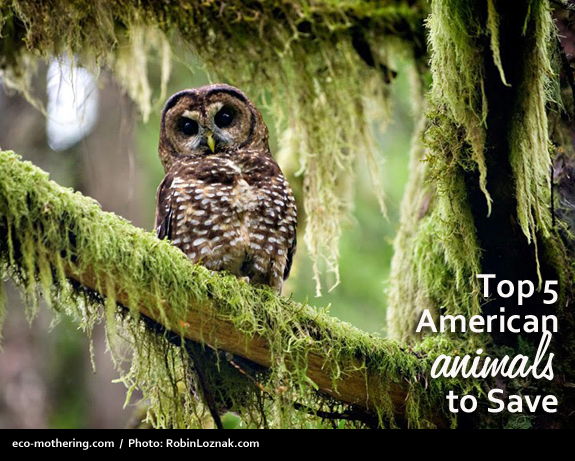
Top 5 American Animals to Save

I had this idea to incorporate regular Top 5 lists into my blog posts, as people seem to love information condensed like that. Sofie wanted me to begin with animals. Coming off the heels of her Save The Wild Animals birthday party last weekend, it seemed fitting.

According to Defenders of Wildlife, there are more than 1800 plant and animal species currently protected by the Endangered Species Act. One of the biggest factors threatening these animals is habitat loss due to pollution or development.

top5-animals-to-save

My top 5 below are found in America and are not necessarily the most threatened. They are just five species that Sofie and her friends showed an interest in learning about. I’ve included links on protecting them—kids enjoy knowing they have the power to help animals in need.

  • Jaguar. Not your typical kitty, the jaguar is the largest cat in the Americas. The tail alone can reach 30 inches. Adults grow to about three feet in height and four feet in body length. Ranging from southern United States to South America, jaguars are mainly forest dwellers, but they also swim and hunt in the water. (See this National Geographic video of a jaguar vs. a croc.) The species was hunted for its spotted coat in the 1960s and 1970s. Today, their numbers decline largely due to clearing of the rain forests and, less so, because some farmers and ranchers kill the cat for eating their livestock. Save the jaguar.
  • Sea Turtle. One of the planet’s oldest creatures, the sea turtle species has been around since the dinosaurs! Unlike other turtles, this marine creature cannot retract its head into its shell. Sea turtles migrate hundreds of miles in temperate waters between feeding and nesting grounds, and they can live up to 80 years old. Kemp’s Ridley is the smallest sea turtle (30 inches) and the leatherback is the largest (six feet). Only about 1 in 1,000 baby sea turtles survive due to predators, development and human pollution such as oil spills and marine debris, which the animals ingest or become entangled in. Read 5 things you can do to save sea turtles (including turning out the lights)!
  • Gray Wolf. Great grandpa to the domestic dog, wolves are the largest member of the canine family and can sprint up to 45 mph. Although called “gray,” they range in color from white to brown to black and are mostly found in the northern United States and Canada. (Yellowstone National Park is a great place to see and hear wolves in their natural habitat.) Nearly wiped out in the U.S. in the 1930s, wolves are making a comeback. Their biggest threats are human development into wolf territory and being targeted by livestock owners. Help organizations protect this species by adopting a gray wolf.
  • Northern Spotted Owl. The disappearing old growth forest is this creature’s biggest problem. Northern spotted owls pair off and require a sizeable area for nesting and hunting, however, their habitat within America’s oldest forests (mostly in the Pacific Northwest, California and British Columbia) is targeted by loggers for the massive, old-growth trees. Like other owls, the northern spotted owl hunts at night for flying squirrels and mice, silently swooping down on its prey with a four-foot-long wingspan. Sign this petition to protect the northern spotted owl. / Read my article published in Skipping Stones children’s magazine on the plight of the spotted owl.
  • North Atlantic Right Whale. One of the rarest marine mammal species, the North Atlantic right whale (called that because it was once considered the “right” whale to hunt) has less than 400 individuals left in the world. These peaceful giants can weigh up to 70 tons, average 50 feet in length and are usually found on the eastern coast from Nova Scotia to Florida. This whale can be distinguished by its lack of a dorsal fin and the white patches of skin (callosities) on its unusually large head. Humans pose the biggest threat – at least four North Atlantic right whales were killed last year due to injuries sustained from entanglement in fishing gear and being hit by a ship. Have your kids play the Right Whale Identification Game sponsored by New England Aquarium, or learn what you can do to protect this species from extinction.


On Conservation: Front-Loading Washers and Tissues

{Editor’s Note: this is Day 4 of the EcoChallenge through the Northwest Earth Institute. You can read about the kickoff here or register here.}

ENERGY EFFICIENCY AND WATER CONSERVATION

As I’m writing this, some lovely men are installing our new, energy-efficient, front-loading washing machine. It is not our first front-loader. We bought one a few years ago, but that particular brand had some issues and several repairs. It was enough to make me rethink the front-loading option because the problem revolved around the piston and bearings that hold up the tub. One repairman claimed it was a common problem with front-loaders.

The other pro for reverting to a top-loader was money. We had $500 credit for the replacement, and the store carried a $500 Maytag top-loader for just that price. It wouldn’t cost us a thing (except buying a new product service plan). The lowest priced front loaders were $799 including an LG we liked. (Before knowing anything else about the brand, I simply liked its name: Life’s Good.)

Then I did my research looking for consumer reviews and recommendations from places like Consumer Reports. And I just couldn’t get past the green stats on front vs. top loaders. Even the HE top loaders aren’t as good.

According to the California Energy Commission, front loaders cut water use by nearly 40 percent. (25 gallons of water to the 40 gallons of a typical top loader.) That saves about 7,000 gallons of water per year. And, as I know from our previous washer, so much water gets squeezed out of the clothes, that dryer time is minimal. The yellow ENERGY STAR tag that comes with the washer informs me it only requires 97 kWh of electricity or about $10 annually.

In the long run, we’ll make our money back on the appliance’s cost. Probably in the short run, as the LG model suddenly went on sale for $649, so the cost difference was not much. (It was like a sign from the eco-Universe!) Can’t wait to try my first load of laundry.

On the energy front, I also want to give kudos to my husband who has turned off his laptop two nights in a row now. Nothing like being mentioned publicly in a blog to motivate you, right, Honey?

TRASH REDUCTION

My daughter has committed to reducing her tissue use. I don’t understand Sofie’s fascination, but I routinely find tissues among her dolls and animals, serving as blankets or clothing or horse saddles. While I admire her fashion creativity, I often cite the tree-killing defense and ask her to use something besides tissues. My daughter will agree amiably at the moment, but then I find that she continues to use them in her play.

However, for the EcoChallenge, Sofie has agreed to abstain. She’s using a hankerchief for her nose at night, and I guess the dolls and horses have to suffer with store-bought fashion outfits and blankets made of fleece remnants.

I realize the next step is for me to stop buying tissues altogether, but that’s a tough one. I’m still addicted to certain disposable items for their convenience. I use tissues for blowing noses, cleaning glasses and as a quick solution for the occasional bug kill.

I could use some help on this one. Does the sustainable world commit to hankerchiefs and cloth rags? Does the energy use from extra laundry outweigh the benefits? Aren’t recycled tissues super pricey? Are there other options I’m not aware of?

ALTERNATIVE TRANSPORTATION

Here’s the update on the battle: My achy body lost out, and I’m two for two in finding alternate transportation to zumba class! I walked to class yesterday (a 25-minute warm-up) and carpooled home with someone. Other than my exercise class, I haven’t gone anywhere within a two-mile radius of my home. Knowing that I’ve committed to walking or biking has made me reconsider that trip to Subway or a quick stop by a friend’s house. I stay home more and make do with what’s available (leftovers and Pandora radio). I don’t think I’m in danger of becoming a recluse yet.

Beyond Recycling: 8 Ways You May Not Have Considered to Go Green With Your Kids

8-ways-to-go-green

Sofie mails back her recyclable Preserve toothbrush.

  1. Have “power down” days.

    We humans are addicted to electricity and all its accompanying gadgets. There should be a few days each year (once per season is nice) where the family “powers down.” This means no TV, music, computer, electric lights, etc. (You can still eat, of course, but try using the more natural gas stove instead of microwave radiation.)

    My husband and I have powered down for many a Winter Solstice. It’s a way of slowing life down for a bit and reconnecting with each other as well as yourself. Last August, we experienced an unintentional powering down during a five-day blackout. Still, once I got past the loss of food, it was quite enjoyable. The three of us spent time in the same room, playing board games, reading, taking walks and actually meeting our neighbors. We lit candles as the sun set and went to bed early, sleeping against a background of cricket song. It was like camping without the pesky bugs. And the silence was delicious. You don’t realize how much background noise is created by appliances and street lights until the power goes out. Sofie had a ball, of course. Undistracted by electronic devices, her parents had more undivided attention to share.

  1. Donate regularly to a green cause.

    A few years ago I made it a family tradition to donate to Heifer.org at Christmas. I wanted to instill in Sofie the holidays as a time of giving not just receiving. It was a surprise for her to learn that some kids in the world live very differently, struggling just for food. Now she enjoys perusing the Heifer catalog each year and choosing an animal to give to some needy family. There are tons of green orgs out there (here are ten big ones). Part of the fun is including kids in the process of exploring them. Use Charity Navigator to view ratings on favorably reviewed charities or to find a charity geared to a specific interest of your child’s.

  1. Always eat ice cream by the cone.

    At the store, bypass the “child-friendly” plastic or (horrors!) Styrofoam cups that will only add to the world’s landfills. Your kid wants the cone anyway – let him enjoy it! At home, avoid using another bowl that will require washing – have fun and save water by making your own cones.

  1. Let them wear their favorite clothes.

    Over and over and over. This greatly reduces washer and dryer usage, thus saving water and energy not to mention your time. If I let her, Sofie would likely wear the same three dresses. So why don’t I let her? We seem to think that little kids are dirty, but it’s rare that my daughter comes home from school with stains or rips. She doesn’t have body odor yet, so the clothes don’t smell. (Honestly, I can’t tell you how many times I’ve worn a pair of jeans before washing them.) I suppose I keep thinking she’ll finally wear that really cute shirt at the bottom of her drawer, but she never does. In the same way that we have the three-second rule for food dropped on the floor, why not enforce the three-day rule for clothing? Only toss it in the hamper after it’s been worn three times. As long as she has clean underwear, we’re good.

  1. Learn to sew.

    It’s sustainable. If you’re a sewer, teach your child the skill — it ‘s bound to be a bonding experience. If you’re like me, beg your mother to teach her. While I can use needle and thread to mend socks or reattach buttons, I never learned to use a sewing machine. However, my mother is an amazing seamstress. She made clothes for my sister and I (including prom dresses) as well as for our Barbies. Those doll outfits lasted a lot longer than the cheaply made ones we buy today. It seems the art of mending has disappeared in our increasingly disposable society. When clothes fray, we toss them. When shoes wear, we toss them. What message does this send our kids? Sofie has recently taken an interest in making clothes with fabric and scotch tape. So it seems the timing is ripe for an introduction to sewing. Maybe she and I can learn together. This will definitely come in handy as she wears out her favorite clothing (see #4 above).

  1. Switch to an eco toothbrush.

    About 50 million pounds of toothbrushes make their way into U.S. landfills every year (Source: Green Living Ideas). Since dentists advise us to replace our toothbrush every three months, using a green one seems like a sustainable idea. Brushing teeth is always a struggle with Sofie, and I don’t think an eco toothbrush will make it any easier. But the disposable Barbie and princess brushes aren’t helping either. So why not invest in an eco toothbrush? Here are a few recommended ones. Preserve toothbrush handles are made from recycled yogurt containers. And after three months of use, you can mail them back (postage paid) to be recycled again! You can find Preserve in Target and Whole Foods. The TerraDent toothbrush from Eco-Dent reduces waste with a reusable handle that comes with replaceable heads. They have a Funbrush design especially for kids. The Australian Environmental Toothbrush made of bamboo is biodegradable, as is its packaging. They have adult and child versions and toothbrushes can be ordered in a year’s supply.

  1. Find a second life for packaging.

    This idea is illustrated in my blogs on giftwrap and the recycled dollhouse. And it follows that cliché that children are often more interested in the box than what came in it. This is still true at Sofie’s age. In her class, I sometimes walk in to see a dance floor made of bubble wrap or mail boxes built from oatmeal containers. Last weekend, Sofie entertained herself with a large furniture box that became everything from a slide to a coffin (don’t ask). Last night, she saved cardboard hole punch remnants with plans to make earrings from them — an idea that would have never occurred to me. With every piece of packaging a potential toy, reusing materials is a great way for young imaginations to flourish.

  1. Play green games online.

    I’m sure there’s an argument over whether more energy is used in playing computer games or manufacturing board games. I’m not going there. Instead, I’m presenting some eco-minded online games for you and your kids. Aside from being fun and nonviolent, many of them offer educational benefits or green rewards. Most are free or have free versions. At My Green Games, creators plant a tree in Peru for every 1,000 games played on their site. Kids adopt a hamster and learn about earth sciences in EcoBuddies. Not into hamsters? Create a monkey on MiniMonos. If you buy a membership, a kid in India gets clean water. Vocab enthusiasts will enjoy Free Rice – for each correct answer, the site donates 10 grains of rice to end world hunger. I filled up a few bowls yesterday. Here are a few other sites with green games: Planet Pals, National Geographic Kids, EcoKids, Plan It Green from Big Fish Games and a list for older kids that include challenges of climate change, energy and bird migration.