Eco-Friendly Pest Control for Your Garden

This is a guest post by Maya Rodgers.

Perhaps one of Mother Nature’s greatest mysteries is her ability to create and maintain highly balanced ecosystems in which animal, plant and insect life mutually thrive.

For me, gardening and eating what I grow is one of my most satisfying hobbies. But when pests make a mess of my garden, I get frustrated and discouraged. Perhaps you’ve experienced a similar feeling? Before turning to products that may harm your garden (and you), investigate natural options. Fortunately, there are many natural and eco-friendly remedies for pest control.

natural-pest-control-garden

Add Beneficial Insects

One of the simplest solutions to a garden pest problem is to introduce beneficial insects. Remember that not all bugs are pests—beneficial bugs ones will eliminate the pesky ones for you. Unlike pesticides, beneficial insects introduce natural harmony into your garden. Pesticides may kill pests, but they can also kill the beneficial insects, making your garden susceptible to the influence of nearby bugs who can now roam freely.

Ladybugs are one of the best known beneficial insects. They’re predators of common garden pests like aphids, mealy bugs, mites and other soft-bodied insects. Green lacewings are another good insect to have around. They love to feast on aphids and beetles that could potentially damage your garden. Also noteworthy—although not technically an “insect”—are nematodes.

There are many types of beneficial insects, and each targets a range of pests from white grubs, to cucumber beetles and flea larvae. Be careful when purchasing that you order the right kind. Buy beneficial bugs online or at a local gardening store.

Put Up a Wall

Another natural way to control pests in your garden is to divert, deter and deny them access to your goods. Try planting a barrier of spearmint, peppermint or pennyroyal around your garden to deter ants, aphids, cabbage moths and even rodents. You can accomplish this by setting up your garden in concentric rings or squares. Keep plants susceptible to pests on the inner spheres, and plant natural pest repellents like mint on the outside.

If you’d rather not reshape your garden, try one of these other natural pest barriers to deter the little garden ghouls. Sprinkle sand, lime or copper to keep snails away from your harvest. Cayenne pepper, charcoal, chalk and garlic all work effectively to deter ants. Neem oil (derived from neem seeds, an evergreen tree native to India) is a natural, non-toxic spray that kills many pests without harming birds, mammals or beneficial insects.

Lure Pests Away

Also consider the possibility of creating diversions for your garden pests. By creating something that the pests want (or think they want), it’s possible to lure pests away from precious plants. Lures come in many shapes and sizes, and may use scent, light or food to deter bugs. For example, a very simple snail trap that has worked for me in the past is to prop a pot upside down in your garden. Snails should come along and nestle in your pot’s shade. Once they have gathered, you can pick up the snails and deposit them elsewhere. A good lure for slugs is a bowl of beer. Bury a small bowl filled with beer at dirt level so the slugs can easily crawl in. Attracted to the beer, the slugs will climb inside the bowl and drown.

There are many more options for naturally dealing with pests in your garden. Remember, your goal is to keep your garden toxin free and create balance in the ecosystem. Good luck!

About the author: Maya Rodgers works as a pest control consultant and specializes in termite treatment. She’s had extensive pest-related gardening experiences, both in her own and others’ backyards. This season, her peppers and tomatoes are doing great, but her Brussels sprouts aren’t flourishing as well as she’d like. Maya muses about many random things at www.petsandpests.com.

This post is featured at Small Footprint Friday and Frugal Days, Sustainable Ways.
 

Top 5 Things You Should Know About Hazardous Waste in Your Home

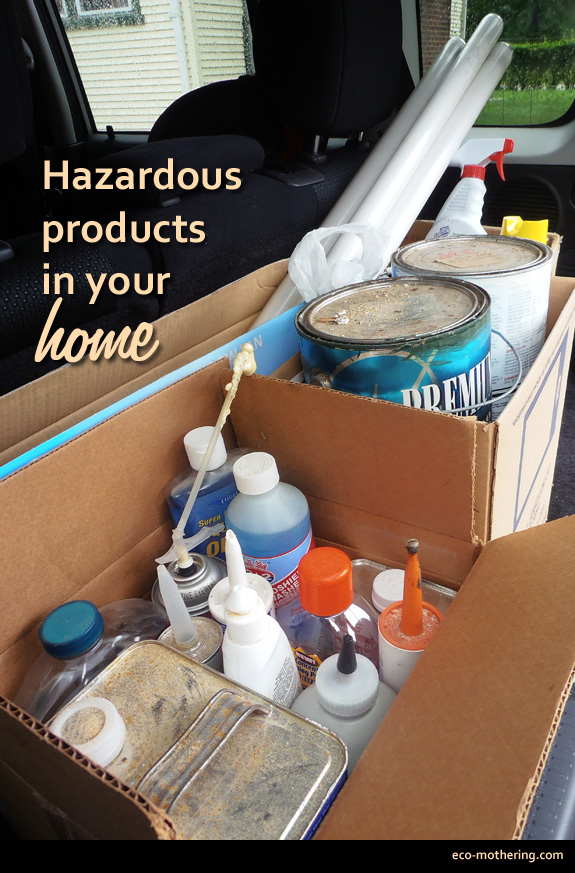
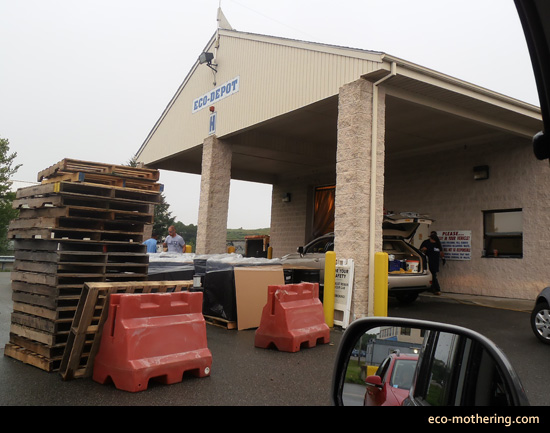
I made a drop-off at the Eco-Depot last week. That’s Rhode Island’s household hazardous waste (HHW) collection agency. I’ve known about them for years but pure laziness has kept me from ridding our home of toxic products (some are even leftover from the previous residents). Scroll to the end of this post to see a partial list of what is considered household hazardous waste.

RI-eco-depot

Sofie and I make a trip to Rhode Island’s Eco-Depot to drop off our household hazardous waste.

It feels great to have finally made the trip. This isn’t to say that my home is completely toxin free. We have nail polish remover, antifreeze, craft glues, etc. that we still use. But getting rid of the old stuff has made a big dent, and it makes me breathe a little easier.

  1. Know the Dangers

    So there’s a can of old paint thinner sitting in your basement. Big deal. A few items don’t seem like much, but when you add up all the toxic products in your home, the effect multiplies. Containers degrade over time. Fumes escape. They seep into your home and corrupt your air quality.

    According to the EPA, the average home can have as much as 100 pounds of environmentally harmful products in it! From the EPA website: “Chronic exposure occurs over a much longer period of time, usually with repeated exposures in smaller amounts… Chronic health effects are typically illnesses or injuries that take a long time to develop, such as cancer, liver failure, or slowed growth and development. One reason chronic exposure to even tiny amounts of hazardous substances can lead to harm is bioaccumulation. Some substances are absorbed and stay in our bodies rather than being excreted. They accumulate and cause harm over time.”

  2. Look for Labels

    If a product has a warning label, it’s dangerous to your health and to the environment. Always look for warning words such as “Danger” “Toxic” “Corrosive” “Flammable” “Reactive” – these are indicative that the product is hazardous in some way and requires special disposal (a.k.a. NOT the trash can).

  3. Hand It Over

    If you’re finished with a product, don’t let it sit for years in your home. The Environmental Protection Agency wants you to dispose of household hazardous waste safely. Call your local environmental agency, town office or community recycling center to find out about drop-off sites or collection days in your area. Ask what items they accept since each state is different.

    Got pharmaceuticals? On the semi-annual National Prescription Drug Take Back Day, events across the United States allow you to drop off expired drugs. Learn more about disposal of unused medicines.

  4. Remember Nemo

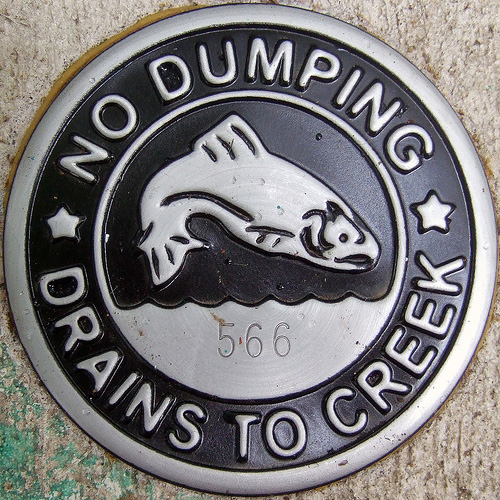
    “All drains lead to the ocean” is the phrase that helped a certain clownfish. And while the truth may not be that literal, anything dumped down the sink, toilet or sewer can contaminate your local waters and marine life. Wastewater plants can’t filter out every chemical, and when heavy rains tax the system, it typically results in sewage overflow. Some cities utilize storm drain labeling programs to remind residents of this. Keep your rivers and lakes healthy by taking your hazardous waste to a collection site.

  5. Seek Alternatives

    Most hazardous products have safe, non-toxic alternatives you can use instead whether it’s an eco-friendly brand you purchase or a simple DIY recipe. Google “non-toxic alternative to _____” to begin your search. Or check out this DIY Household Cleaners book by my friends at DIY Natural.

hazardous-household-waste

Read this (incomplete) list for an idea of what constitutes household hazardous waste. How many are in your home?

  • Ammonia
  • Ant and Roach Killer
  • Antifreeze
  • Batteries (rechargeable, button, lead)
  • Bleach
  • Brake Fluid
  • Bug Repellent
  • Car Wax
  • Drain Opener
  • Epoxy
  • Fertilizer
  • Fire Extinguishers (unused)
  • Flea Collars
  • Furniture Polish
  • Gasoline
  • Glue
  • Grease and Rust Removers
  • Hair Products (including hair spray, coloring kits and lice shampoo)
  • Light Bulbs (CFL, fluorescent)
  • Mold and Mildew Removers
  • Mothballs
  • Nail Polish and Remover
  • Oven Cleaner
  • Paint (oil based)
  • Paint Thinner, Stripper and Remover
  • Pepper Spray
  • Photographic Chemicals
  • Pool Chemicals
  • Rubber Cement
  • Shoe Polish
  • Stain Remover
  • Thermometers (with mercury)
  • Toilet Bowl Cleaner
  • Transmission Fluid
  • Weed and Insect Killer
  • Windshield Wiper Fluid
  • Wood Preservatives

This post is featured on Thank Your Body Thursday and Party Wave Wednesday.

Make Your Vacation Sustainable by Choosing Green Hotels

This is a guest post by Sam Marquit of Fair Marquit Value.

Environmental sustainability is not just a project for big businesses and corporations. Everyone can take action through voting with his or her dollar. By vacationing at eco-friendly resorts, visitors show businesses the types of companies they believe in.

After years as a commercial contractor, I know this works. In the last few years I have seen a rise in environmentally sustainable businesses. As more consumers demand greener companies, hotels are responding to that demand.

eco-hotel-marriott

The green Marriott experience includes water-saving toilets and shower heads,
laundry bags and soap dispensers made of recycled plastic and an optional linen reuse program.

The Marriott —one of the largest hotel chains in the world—is making an effort to go green by conserving energy, reducing waste and using environmentally friendly materials. One example: greening their key cards. Each year, a hotel with 100 rooms will throw away an average of 10,000 key cards… or 50 pounds of plastic. To lower this waste, the Marriott invested in key cards made from a biodegradable corn by-product. This sustainable solution will keep 66 tons of plastic out of our landfills.

eco-hotel-Vegas-Palazzo

A large solar thermal system provides hot water for swimming pools and spas
at Las Vegas’ Palazzo and Venetian.

Another hotel that is making a difference is the Palazzo Hotel & Resort in Las Vegas. Visitors at this hotel can enjoy rooftop solar panels and lower carbon dioxide emissions. The hotel reuses its own waste and has a water recycling system installed. With all of these environmentally sustainable features, the LEED-certified Palazzo was recently dubbed the “Most Eco-Friendly Yet Stylish Hotel in America.” Other Las Vegas hotels and businesses are catching on to being green.

eco-hotel-Vegas-Palazzo2

Suites at the eco-friendly Palazzo boast low-flow showerheads,
energy-efficient LED lighting, high-efficiency toilets and occupancy sensors.

Rising green initiatives like Eco-Innovation Europe aid in sustainable development. This organization saw a disconnect between what researchers worked on and what companies produced. Their goal is to bridge the gap and get both parties on the same page. Eco-Innovation Europe supports research of environmentally friendly products and processes. They promote recycling, reduced carbon dioxide emissions and efficient resource management. Through the work of this company and others like it, new techniques are being developed that can really change the world.

As tourists, we can also make a difference in greenhouse gas emissions and pollution by choosing hotels and businesses that are environmentally friendly. (Search for green hotels now!) Going green provides benefits to customers as well as to a company’s bottom line. It is important to continue this trend to also better our planet for future generations.

About the Author: Sam Marquit is a New York independent contractor and home renovation/remodeling expert who aims to reduce his (and others’) carbon footprint. Sam shares his knowledge about sustainable building on his blog at http://fmarquitv.tumblr.com/


Green Your Baby Shower

With celebrity pregnancies getting so much attention lately, my mind has turned to baby showers.

Baby registries are big business, and the celebrations often center around light-hearted disposability. However, going green doesn’t have to take the fun out of baby showers. Here are some tips for making more eco-conscious decisions. Choose a few or try them all.

green-baby-shower

Go Electronic.

This is easier to do than ever. Whether you use Evite, Pingg or design your own PDF, send the invitations via email. People get it right away, they’re likely to respond faster and most online services automatically track RSVPs. Oh yeah, and you’re saving trees. Make sure to include on the invitation a line that sets the tone for your green shower, such as: “Join us for an earth-friendly baby celebration.”

Paper gets a dose of green with seeded paper invitations (and thank-you cards) that guests can plant as wildflowers afterwards.

Shower Activity Idea: Make this a shower activity by asking the guests to bring their invitations with them. Together, the group can plant a wildflower garden in honor of your baby. Having a garden (or tree or other plant) in your yard from that day leaves a lasting impression for you and your child.

Decorate Simply.

A baby shower lasts just a few hours. Do you really want to spend another hour or two hanging (and cleaning up) streamers and balloons? Decorate simply with nature. Use the season for inspiration. In good weather, have the shower outdoors in a garden or park with natural landscaping as the automatic décor. Inside, gather round a cozy fireplace or create ambiance with soy candles. Consider decorating with items that serve double duty such as potted plants that guests can take home as favors or edible fruit arrangements that “wow” as both centerpieces and food for the guests.

fruitpram

Fruit baby carriage from mybrightyellowkitchen.blogspot.com

Use “green” as a theme: serve green-colored smoothies and locally-grown foods. Hang a clothesline adorned with secondhand clothes for baby. Make the traditional diaper cake with cloth diapers.

This is the time to use the good china. Scour secondhand stores for a variety of fabrics to use as pretty cloth napkins and tablecloths. Add colorful dishes and glassware to spruce up the table. If you refuse to wash dishes, a number of places now offer eco-friendly (and good-looking) tableware including GreenPartyGoods and Green Planet Parties.

Shower Activity Idea: Have guests paint pieces of colorful fabric with their wishes for you and baby. The fabric pieces become cloth napkins for the shower and a keepsake for you.

Alternatively, purchase organic onesies or T-shirts for baby that guests can paint (using non-toxic dyes) with pictures or fun slogans.

Ask for Gently Used, Recycled Gifts.

Used items for a new baby? Horror of horrors! Or so some people think. But really, the baby doesn’t care, and when it comes down to it, you won’t either. You’ll care more about getting a few hours of uninterrupted sleep.

When I was pregnant, I ‘ooh’-ed and ‘ah’-ed in the aisles of Babies ‘R Us. I spontaneously bought items, such as the super soft, white fleece blanket adorned with cute giraffes. But what it comes down to is this: That brand new, fleece blanket with cute giraffes gets just as poo-stained as the hand-me-down from Aunt Eulalie.

Yard sales, secondhand stores, craigslist and friends’ garages are loaded with baby gear from strollers and high chairs to swings and toys. Since babies don’t use them very long, most of these items are in great condition. For safety reasons, there are a few things you should get new, such as a car seat and a breast pump. But beyond that, you can keep stuff out of landfills by shopping used.

You’re not being “cheap.” You’re being conscious while getting something you need. That something will likely be unique too, because you didn’t get the latest stroller from Target that everyone else has.

You can register online with wishlist.com where you can compile gifts from a variety of sites and stores and specify that you want the BPA-free bottles or the chlorine-free disposable diapers.

Shower Activity Idea: Ask guests to bring their favorite book from childhood (whether a used or new copy) as a gift for baby. This will kickstart your child’s library and last longer than most toys. Make a game of guessing who brought which book. Why is it their favorite? What memories do they recall?

Request Reusable, Creative Gift Wrap.

This doesn’t have to mean every gift is wrapped in newspaper. The wrapping can actually be part of the actual gift, such as an organic blanket or baby sling. Natural baskets can hold any number or shape of gift and can be reused as baby storage. Crafty friends might like to sew a diaper bag or tote.

Shower Activity Idea: Make it a contest and award a prize to the guest with the most creative, reusable gift wrap.

Give Something Green to the Guests.

Make it something the guests can actually use instead of a plastic momento that quickly finds its way into the trash. Some ideas? A potted plant, handmade soaps, organic chocolate truffles or herbs in a box. Or have someone (husband, mother, friend) take a photo of you with each guest when they arrive. That person can print the photos out and insert into pre-bought recycled frames to give to each guest before they leave.

Shower Activity Idea: Acquire baby photos of each guest (or search for celebrity baby photos online) and hang these up in a display. Make a guessing game of who’s who.

Sign up for Eco-Mothering’s RSS feed so you don’t miss my upcoming post on the Blessingway—an alternative celebration to the typical baby shower. I had one myself, and it was more memorable and intimate than any baby shower I’ve ever been to.

green-mom-gift-card

GIVEAWAY

Start shopping green now with this $25 gift card from the Green Mom Guide!

This resource (from the woman who brought you the popular Green Bride Guide) offers eco-friendly, non-toxic items for both mom and baby such as cloth diapers, organic bedding and the Welcome Home Gift Set.

The giveaway is now closed.

a Rafflecopter giveaway


Disclosure: Thanks to Green Mom Guide for providing a $25 gift card to one of our readers. As always, all thoughts and opinions are my own.

This post is featured at Frugal Days, Sustainable Ways, Small Footprint Friday and Holistic Squid’s Party Wave Wednesday.

Be a Greener Babysitter with These 4 Eco-Friendly Kid Activities

This is a guest post by Christine Maddox.

An eco-friendly lifestyle promotes sustainability. Whether or not the family you sit for follows that lifestyle, as a babysitter you can introduce earth-friendly projects that are also fun and educational for the kids.

  1. Potato Power

    A favorite activity among many kids is discovering that potatoes can become batteries that can be used to power an LED light bulb or clock. This demonstrates that the ability to generate power is all around us. The simple experiment is cheap requiring not much more than a potato, a penny, a galvanized steel nail and a few alligator clip wire units. Experiment with other foods as well; citrus fruits supposedly produce more power than potatoes. Follow these steps for making a potato-powered LED clock.

  2. Solar Energy

    Experimenting with solar power is an affordable option for introducing children to sustainable energy. The cost of solar panels have decreased so greatly that small cells can be extracted from sidewalk lighting devices for $1 a piece at the local dollar store. With a handful of these devices and a computer fan from the store, you can engage the children in making a solar-powered cooling unit. Or skip the cells and use aluminum foil and a pizza box to make a solar-powered oven for cooking S’mores!

    solar-smores-spring-craft-photo

  3. Wind Power

    Wind experiments are a great way to teach children that power can be generated without the use of fuel-based technologies like coal and oil. With wind turbines popping up everywhere these days, you might want to demonstrate how they work by making your own. If you’re really into it, you can buy wind power kits for kids online for about $50. These kits include a variety of experiments that you and the kids can perform — without having a degree in engineering! Or try these simple wind energy activities.

  4. Edible Garden

    During the spring and summer months, you can encourage healthier eating habits by introducing the kids to gardening. Take it a step further, and get permission from the parents to create an indoor kitchen garden. Here are some indoor garden tips. Children get excited about eating vegetables they have grown themselves. Some good foods for growing indoors include: herbs, lettuce, tomatoes, beans and small carrots. Involve the children in selecting the seeds, decorating the containers and monitoring plant growth. When harvest time comes, you can whip up a homegrown and healthy meal from the fruits of your labor!

About the Author: With a focus on parenting, kids and nanny care, Christine Maddox blogs for www.4nannies.com while pursuing her Master’s degree from the University of Texas. She can be reached at [email protected].


Top 5 Eco-Friendly Gifts for Appreciation Week

Spring is the time for appreciating co-workers, teachers and volunteers. Just look at its abundance of special days. Administrative Professional Day on April 24. National Volunteer Appreciation Week, April 21-27. Teacher Appreciation Week, May 6-10.

Sure, you can go with the usual flowers or the traditional apple. (Does anyone do that anymore?) But below are some ideas for eco-friendly giving. Hint: Stock up now for October’s Customer Appreciation Week and National Bosses Day.

eco-friendly-gift-ideas

  1. Soy Chalkboard Candles

    A nifty gift for teacher, boss or colleague, and quite pretty, too. These chalkboard candles are 100% clean-burning soy wax. The containers are reusable ceramic pots or tin cans. Personalize it with your own chalk-written note.

  2. Recycled Stationery

    I remember giving my grade-school teachers pencils with “World’s Best Teacher” printed on them. Now you can give pens made from recycled materials, and screen print something snappy on the barrel. HALO Branded Solutions offers several other eco-friendly promotional products including notebooks, picture frame magnets and bamboo USB flash drives. Or check out these recycled mouse pads. Since items must be ordered in bulk quantities, they make ideal gifts for appreciating large groups like staff or volunteers. Everything can be personalized.

  3. Trees and Seeds

    No, don’t drag a mini dogwood into the office. The cleaner option (and arguably, the greenest gift idea) is to dedicate a tree planting. Dedications start at $25 for one tree (for that special administrative assistant) or $100 for a whole grove (for a group of volunteers). Or buy seed bombs in bulk. Recipients will enjoy tossing the bombs—compacted wildflower seeds—into vacant lots or a co-worker’s messy desk drawer. Bags can be personalized.

  4. Reusable Lunch Boxes

    Perfect for the teacher or employee who brings her lunch to school every day. Fluf offers stylish, BPA-free, organic bags and snack packs. Or try one of these BPA-free, lead-free, stainless steel containers from Eco Lunchbox.

  5. Grow Your Own Marinara

    This garden kit includes tomato, basil and oregano seeds that can be grown right in the bags (dirt included). Perfect for a personal garden or classroom windowsill. Pair it with this marinara recipe.


Top 5 Oscar-Nominated Green Celebrities

Even though posh Hollywood is hardly the standard of going green, I am a sucker for watching the Academy Awards every year. Out of curiosity, I have done some research on which celebrities have a green streak in them. So in honor of this weekend’s Oscars, I made my Top 5 list of Oscar-nominated eco-friendly celebrities.

Colin Firth

Colin Firth photo from thefilmstage.com

  1. Leonardo DiCaprio

    (three Oscar nominations, most recently in 2007 for Leading Actor in Blood Diamond) Founder of the Leonardo DiCaprio Foundation, which works to secure a sustainable future, DiCaprio has fostered environmental awareness throughout his life including support for universal clean water and reducing greenhouse gases. His documentary, The 11th Hour, offers solutions to global warming. The hybrid car-driving actor (who often flies commercial rather than via private jet) has been an active supporter of World Wildlife Fund, National Resources Defense Council and Global Green USA.

  2. Natalie Portman

    (two Oscar nominations including 2011 win for Leading Actress in Black Swan) A staunch vegetarian (often vegan) who launched a vegan shoe line in 2008, Portman has resolved to carbon neutralize all her travels. She is a supporter of sustainable jewelry and wears an engagement ring handmade with an antique, mine-cut center stone and conflict-free diamonds set in recycled platinum. The actress has also shown support for PETA, Global Green USA and preventing the extinction of mountain gorillas in Rwanda.

  3. Colin Firth

    (two Oscar nominations including 2011 win for Leading Actor in The King’s Speech) An Oxfam ambassador and Fair Trade advocate, he helped set up Progreso, the world’s first chain of fair-trade coffee shops. The actor also owns Eco-Age, an ecological store in London, which is sustainably lit and heated and offer three stories of eco-friendly products, from bamboo computers to lampshades made from fallen Norwegian trees. In 2012, Firth made a video appeal to prevent illegal deforestation in an area of Brazil where an endangered tribe lives.

  4. Meryl Streep

    (17 Oscar nominations including 3 wins, most recently in 2012 for Lead Actress in Iron Lady) In 1989, the eco foodie created Mothers and Others (now defunct) to educate consumers about chemicals in our food. Streep, who credits becoming a parent as the impetus for her environmental concerns, helps raise awareness of toxins in the environment through her work with Healthy Child Healthy World. The gold Lanvin gown Streep wore to accept her 2012 Oscar win was made from eco certified fabric.

  5. Ed Norton

    (two Oscar nominations, most recently in 1999 for Leading Actor in American History X) A self-proclaimed environmentalist, Norton speaks out on green building, solar energy and waste reduction. In 2008 he narrated the National Geographic special Strange Days on Planet Earth, which explored topics of pollution and climate change. Norton serves as the UN Goodwill Ambassador for biodiversity, is a co-founder of the fundraiser CrowdRise and regularly contributes to the Wilderness Society and Earthjustice. The actor sends an Earth Day message in this 2012 blog on The Huffington Post.


pinterest-logo-45pxView more eco-friendly celebrities on my Pinterest page.